

Cybersecurity and data privacy are constantly in the news. Governments are passing new cybersecurity laws. Companies are investing in cybersecurity controls such as firewalls, encryption and awareness training at record levels.
And yet, people are losing ground on data privacy.
In 2024, the Identity Theft Resource Center reported that companies sent out 1.3 billion notifications to the victims of data breaches. That’s more than triple the notices sent out the year before. It’s clear that despite growing efforts, personal data breaches are not only continuing, but accelerating.
What can you do about this situation? Many people think of the cybersecurity issue as a technical problem. They’re right: Technical controls are an important part of protecting personal information, but they are not enough.
As a professor of information technology, analytics and operations at the University of Notre Dame, I study ways to protect personal privacy.
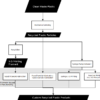
Solid personal privacy protection is made up of three pillars: accessible technical controls, public awareness of the need for privacy, and public policies that prioritize personal privacy. Each plays a crucial role in protecting personal privacy. A weakness in any one puts the entire system at risk.
The first line of defense
Technology is the first line of defense, guarding access to computers that store data and encrypting information as it travels between computers to keep intruders from gaining access. But even the best security tools can fail when misused, misconfigured or ignored.
Two technical controls are especially important: encryption and multifactor authentication. These are the backbone of digital privacy – and they work best when widely adopted and properly implemented.
À lire aussi :
The hidden cost of convenience: How your data pulls in hundreds of billions of dollars for app and social media companies
Encryption uses complex math to put sensitive data in an unreadable format that can only be unlocked with the right key. For example, your web browser uses HTTPS encryption to protect your information when you visit a secure webpage. This prevents anyone on your network – or any network between you and the website – from eavesdropping on your communications. Today, nearly all web traffic is encrypted in this way.
But if we’re so good at encrypting data on networks, why are we still suffering all of these data breaches? The reality is that encrypting data in transit is only part of the challenge.
Securing stored data
We also need to protect data wherever it’s stored – on phones, laptops and the servers that make up cloud storage. Unfortunately, this is where security often falls short. Encrypting stored data, or data at rest, isn’t as widespread as encrypting data that is moving from one place to another.
While modern smartphones typically encrypt files by default, the same can’t be said for cloud storage or company…