
Scientists long thought that Neanderthals were avid meat eaters. Based on chemical analysis of Neanderthal remains, it seemed like they’d been feasting on as much meat as apex predators such as lions and hyenas. But as a group, hominins – that’s Neanderthals, our species and other extinct close relatives – aren’t specialized flesh eaters. Rather, they’re more omnivorous, eating plenty of plant foods, too.
It is possible for humans to subsist on a very carnivorous diet. In fact, many traditional northern hunter–gatherers such as the Inuit subsisted mostly on animal foods. But hominins simply cannot tolerate consuming the high levels of protein that large predators can. If humans eat as much protein as hypercarnivores do over long periods without consuming enough other nutrients, it can lead to protein poisoning – a debilitating, even lethal condition historically known as “rabbit starvation.”
So, what could explain the chemical signatures found in Neanderthal bones that seem to suggest they were healthily eating tons of meat?
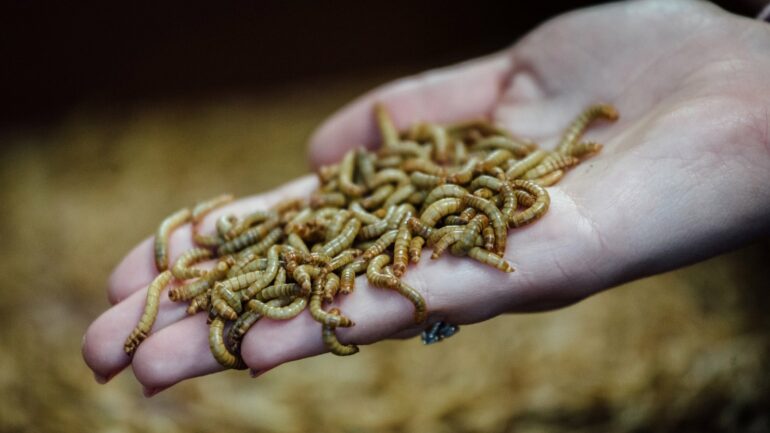
I am an anthropologist who uses elements such as nitrogen to study the diets of our very ancient ancestors. New research my colleagues and I conducted suggests a secret ingredient in the Neanderthal diet that might explain what was going on: maggots.
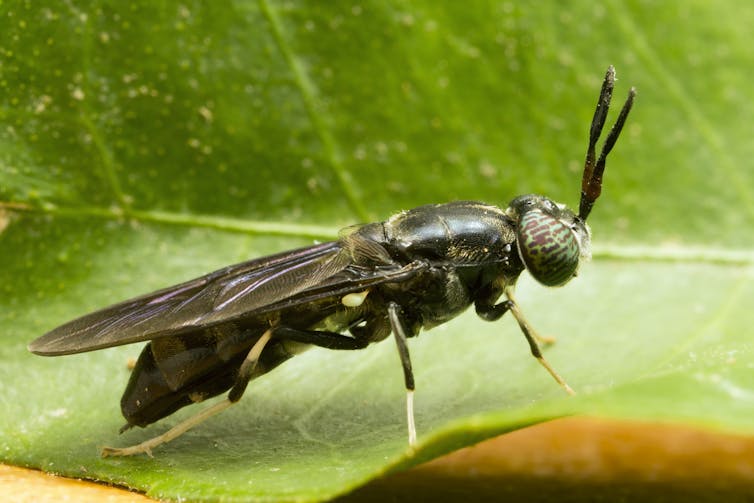
A black soldier fly adult. The larvae of this fly are one of the species of maggots studied.
GordZam/iStock via Getty Images Plus
Isotope ratios reveal what an animal ate
The ratios of various elements in the bones of animals can provide insights into what they ate while alive. Isotopes are alternate forms of the same element that have slightly different masses. Nitrogen has two stable isotopes: nitrogen-14, the more abundant form, and nitrogen-15, the heavier, less common form. Scientists denote the ratio of nitrogen-15 to nitrogen-14 as δ¹⁵N and measure it in a unit called permil.
As you go higher up the food chain, organisms have relatively more of the isotope nitrogen-15. Grass, for example, has a very low δ¹⁵N value. An herbivore accumulates the nitrogen-15 that it consumes eating grass, so its own body has a slightly higher δ¹⁵N value. Meat-eating animals have the highest nitrogen ratio in a food web; the nitrogen-15 from their prey concentrates in their bodies.
By analyzing stable nitrogen isotope ratios, we can reconstruct the diets of Neanderthals and early Homo sapiens during the late Pleistocene, which ran from 11,700 to 129,000 years ago. Fossils from various sites tell the same story – these hominins have high δ¹⁵N values. High δ¹⁵N values would typically place them at the top of the food web, together with hypercarnivores such as cave lions and hyenas, whose diet is more than 70% meat.

But maybe something else about their diet was inflating Neanderthals’ δ¹⁵N values.
Uncovering the Neanderthal menu
We suspected that maggots could have been a different potential…

