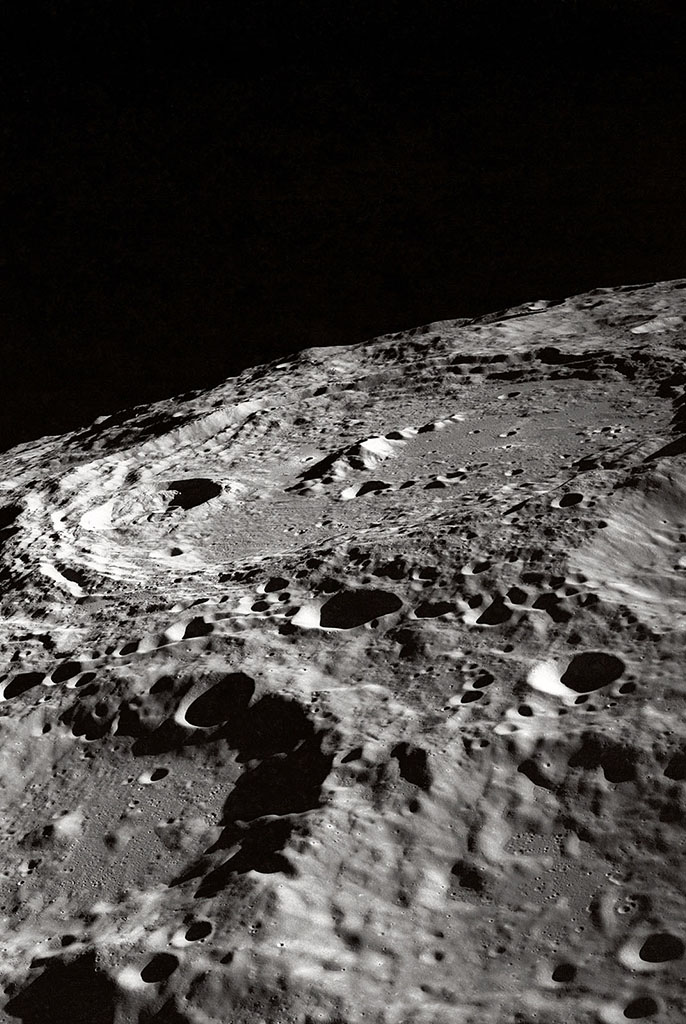
Moose are on the loose in the southern Rockies.
In July 2025, a young wandering bull was captured roaming a city park in Greeley, Colorado. A spate of similar urban sightings alongside some aggressive moose encounters has elevated moose management and conservation into a matter of public debate, especially across metro Denver and the Colorado Front Range.
In Rocky Mountain National Park, a recent study found that moose and elk might be to blame for far-reaching changes to valley ecosystems, as their browsing reduces important plants like willows, depriving beavers of habitat and materials for their wetland engineering. Park wildlife are generally not managed through hunting, but the park has tried techniques like fencing moose away from wetland zones. Publicly, discussion has swirled around further mitigation measures to slow or eliminate moose populations.
At the heart of this debate is a basic question – do moose belong in the southern Rockies at all?
During much of the last century, moose were apparently rare in Colorado. The animals are absent from some early 20th century official wildlife tallies. Then, in 1978, the Colorado Division of Wildlife – now Colorado Parks and Wildlife – released a group of moose into North Park in north-central Colorado. At the time, biologists understood their efforts to be a reintroduction, but in the years since, wildlife managers have shifted their thinking about the place of moose in local ecosystems.
In the decades that followed, the moose expanded their range and numbers. Today, informal estimates by Colorado Parks and Wildlife put the moose population at around 3,500 animals. Under increased moose browsing pressure and a shifting climate, some mountain wetland environments are changing.
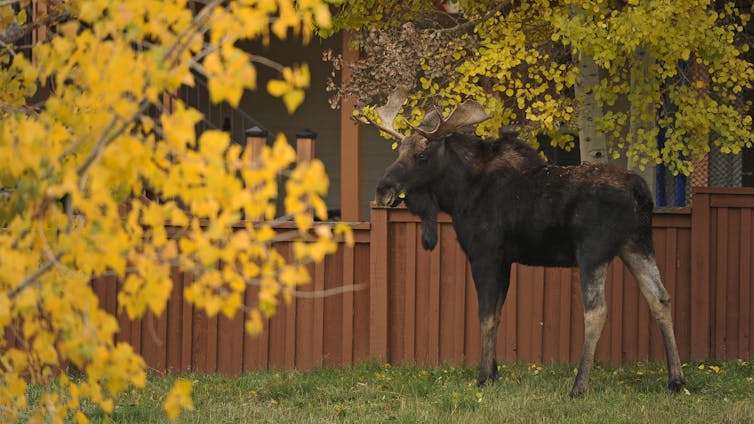
A young bull moose munches on aspen leaves as he passes homes along Newlin Gulch Trail in Parker, Colo., in 2013.
Helen H. Richardson/The Denver Post via Getty Images
Should these changes be thought of as human-made ecological wounds caused by releasing moose? The National Park Service seems to think so.
Statements from 2025 on the park service website, and other public messaging from wildlife officials, assert that Colorado has never supported a breeding population of moose – only the occasional transient visitor. The factual basis for this idea seems to hinge heavily on an unpublished internal report from 2015, which identified only a few archaeological or historical records of moose near the park.

We are a team of archaeologists, paleoecologists and conservation paleobiologists studying the ancient animals of the Rockies.
Understanding moose and their interactions with people centuries ago means carefully analyzing different traces that survive the passage of time. These can range from the bones of animals themselves to indirect clues preserved in everything from lake sediments to historical records.
Are moose actually native to Colorado?
As…