

Curious Kids is a series for children of all ages. If you have a question you’d like an expert to answer, send it to [email protected].
Who invented the light bulb? – Preben, age 5, New York City
When people name the most important inventions in history, light bulbs are usually on the list. They were much safer than earlier light sources, and they made more activities, for both work and play, possible after the Sun went down.
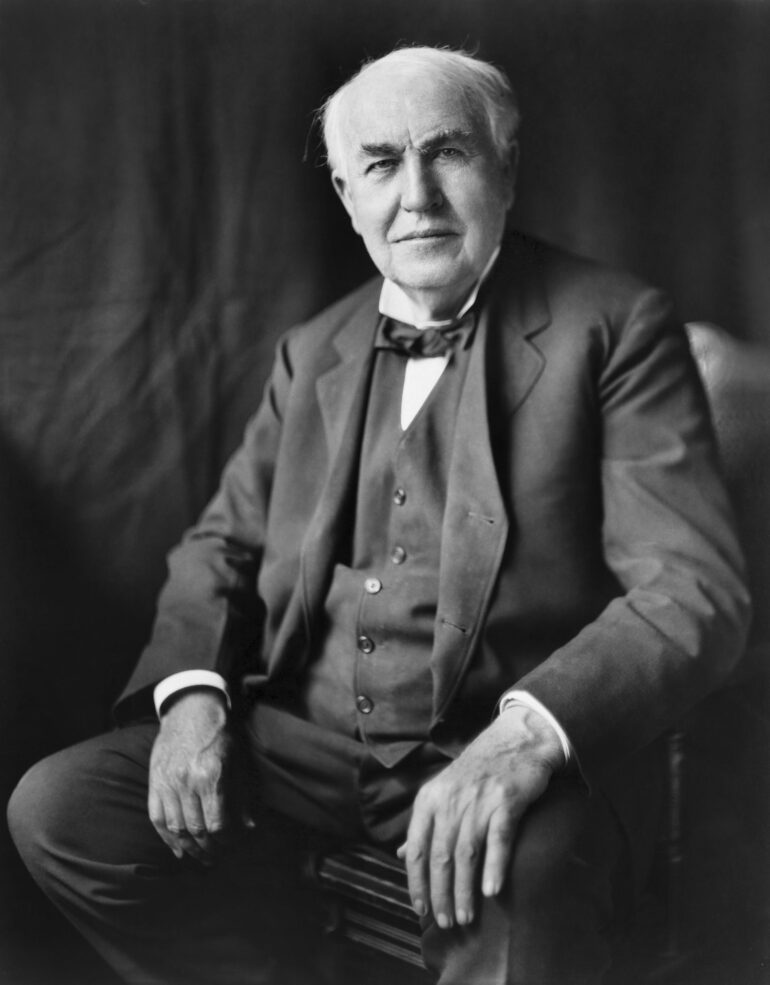
More than a century after its invention, illustrators still use a lit bulb to symbolize a great idea. Credit typically goes to inventor and entrepreneur Thomas Edison, who created the first commercial light and power system in the United States.
But as a historian and author of a book about how electric lighting changed the U.S., I know that the actual story is more complicated and interesting. It shows that complex inventions are not created by a single genius, no matter how talented he or she may be, but by many creative minds and hands working on the same problem.
Thomas Edison didn’t invent the basic design of the incandescent light bulb, but he made it reliable and commercially viable.
Making light − and delivering it
In the 1870s, Edison raced against other inventors to find a way of producing light from electric current. Americans were keen to give up their gas and kerosene lamps for something that promised to be cleaner and safer. Candles offered little light and posed a fire hazard. Some customers in cities had brighter gas lamps, but they were expensive, hard to operate and polluted the air.
When Edison began working on the challenge, he learned from many other inventors’ ideas and failed experiments. They all were trying to figure out how to send a current through a thin carbon thread encased in glass, making it hot enough to glow without burning out.

In England, for example, chemist Joseph Swan patented an incandescent bulb and lit his own house in 1878. Then in 1881, at a great exhibition on electricity in Paris, Edison and several other inventors demonstrated their light bulbs.
Edison’s version proved to be the brightest and longest-lasting. In 1882 he connected it to a full working system that lit up dozens of homes and offices in downtown Manhattan.
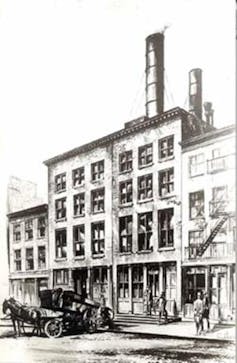
A sketch of Edison’s Pearl Street Station at 255-257 Pearl St. in New York City’s financial district. The station, which generated electricity by burning coal, started operation in 1882 and ran until 1895.
Earl Morter, IEEE Global History Network/Con Edison, via Wikimedia
But Edison’s bulb was just one piece of a much more complicated system that included an efficient dynamo – the powerful machine that generated electricity – plus a network of underground wires and new types of lamps. Edison also created the meter, a device that measured how much…

