
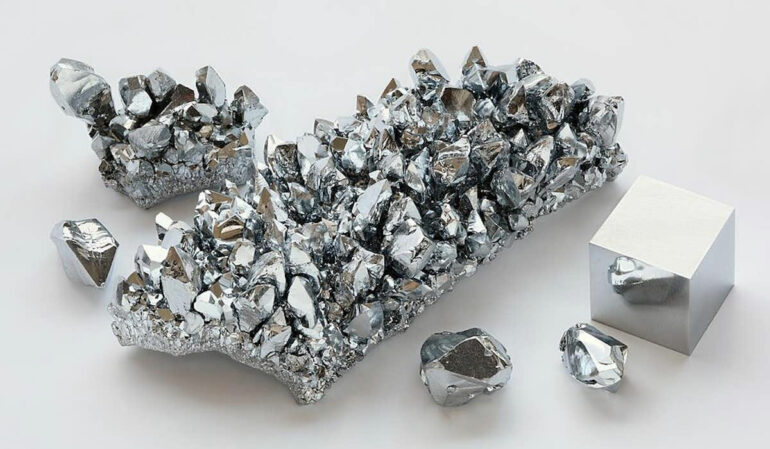
You might best know chromium as a bright, shiny metal used in bathroom and kitchen fittings. But is it also essential for your health?
In a form known as trivalent chromium, this metal is included in multivitamin pills and sold as a dietary supplement that companies claim can improve athletic performance and help regulate blood sugar.
I’m a biochemistry professor with a long-standing interest in how metals function in biology. Although health agencies in the United States and other countries recommend chromium as a dietary requirement, eight decades of research have resulted in slim evidence that people derive any significant health benefits from this mineral.
Why, then, did chromium come to be considered essential for human health?
What is an essential trace element?
To stay healthy, people need what are called essential trace elements in their diet. These include metals such as iron, zinc, manganese, cobalt and copper. As the word “trace” implies, you need only tiny amounts of these metals for optimal function.
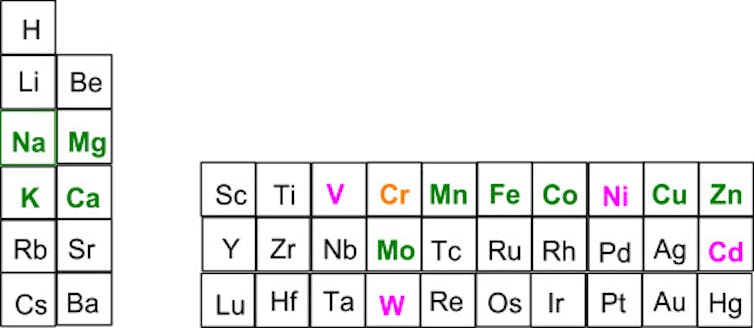
A range of metals are considered essential (green) to humans. Others are important for only some forms of life (pink).
Jomova et al. 2022, CC BY-SA
For most of these trace elements, decades of research have shown they are genuinely essential for health. Iron, for example, is essential for carrying oxygen in your blood, and many proteins – complex molecules that carry out all of the functions necessary for life – require iron to function properly. A deficiency of iron leads to anemia, a condition that results in fatigue, weakness, headaches and brittle nails, among other symptoms. Iron supplements can help reverse these symptoms.
Importantly, biochemists have pinpointed exactly how iron helps proteins perform essential chemical reactions, not just for humans but all living organisms. Researchers know not only that iron is essential but also why it is essential.
Little evidence for chromium’s benefits
However, the same cannot be said for chromium.

Chromium deficiency – having little to no chromium in your body – is extremely rare, and researchers have not identified any clearly defined disease caused by low chromium levels.
Like all food, essential metals must be absorbed by your digestive system. However, the gut absorbs only about 1% of ingested chromium. Other essential metals are absorbed more efficiently – for example, the average person absorbs around 25% of certain forms of ingested iron.
Importantly, despite many studies, scientists have yet to find any protein that requires chromium to carry out its biological function. In fact, only one protein is known to bind chromium, and this protein most likely helps your kidneys remove chromium from your blood. While some studies in people suggest chromium might be involved to some degree in regulating blood glucose levels, research on whether adding extra chromium to your body through supplements can…