
October in much of the U.S. brings cooler weather, vibrant fall colors and, of course, pumpkin-spiced everything. This is peak pumpkin season, with most of the American pumpkin crop harvested in October.
With the pumpkin spice craze fully underway, I find myself thinking more about pumpkins. As an extension specialist working at Oklahoma State University’s botanic garden, I educate the people pouring in to buy pumpkins at our annual sale about the plant’s storied history and its prominence today.
While people often picture pumpkins as bright orange, they actually come in a wide range of colors, including red, yellow, white, blue and even green. They vary in size and texture too: Some are smooth, others warty. They can even be miniature or giant.
The word “pumpkin” comes from the Greek word “peopon,” meaning “large melon.” Botanically, pumpkins are fruits because they contain seeds, and they belong to the squash family, Cucurbitaceae. This family also includes cucumbers, zucchini and gourds. Pumpkins are grown for many purposes: food, seasonal decorating, carving for Halloween and even giant pumpkin contests.
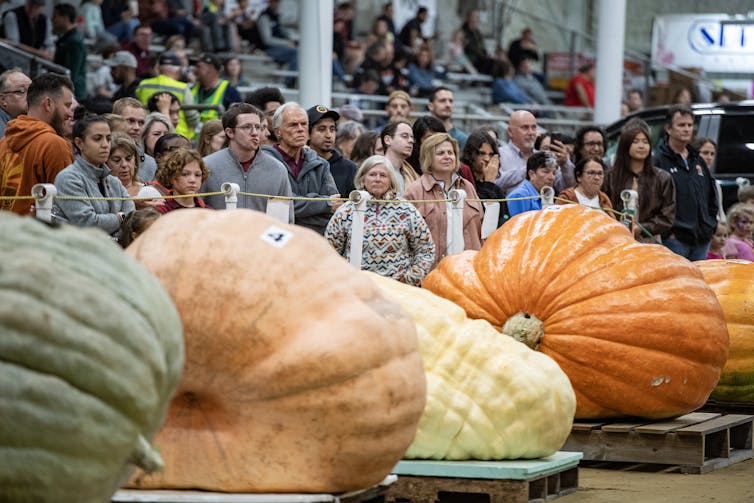
Some pumpkins can be over 1,000 pounds. Pumpkin-growing contests are common at county and state fairs.
Joseph Prezioso/AFP via Getty Images
All 50 states produce some pumpkins, with Illinois harvesting the most. In 2023, Illinois grew 15,400 acres of pumpkins. The next largest amount was grown in Indiana, with about 6,500 acres.
Pumpkin yields vary each year, depending on the varieties grown and the growing conditions in each area. The top six pumpkin-producing states are California, Illinois, Indiana, Michigan, Pennsylvania and Washington.
Early pumpkin history
Pumpkins originated in Central and South America, ending up in North America as Native Americans migrated north and carried the seeds with them. The oldest pumpkin seeds discovered were found in Mexico and date back about 9,000 years.
Pumpkins were grown as a crop even before corn or beans, the other two sisters in a traditional Native American “three sisters” garden. The three sister crops – corn, beans and squash – are planted together, and each has a role in helping the others grow.
Native Americans planted corn in the spring, and once the plants were a few inches tall, they planted beans. The beans vine around the corn as it grows, giving them a natural trellis. Beans also have the ability to take nitrogen from the atmosphere, and with the help of bacteria they convert it into forms that plants can use, such as ammonia, for fertilizer.
After the beans started growing, it was time to plant squash, such as pumpkin. Squash leaves covered the ground, shading the soil and helping keep it moist. The giant leaves also helped reduce the number of weeds that would compete with the corn, bean and squash growth.
Every part of the pumpkin plant is edible, even the flowers. Some Native American groups…