Everyone has looked up at the clouds and seen faces, animals, objects. Human brains are hardwired for this kind of whimsy. But some people – perhaps a surprising number – look to the sky and see government plots and wicked deeds written there. Conspiracy theorists say that contrails – long streaks of condensation left by aircraft – are actually chemtrails, clouds of chemical or biological agents dumped on the unsuspecting public for nefarious purposes. Different motives are ascribed, from weather control to mass poisoning.
The chemtrails theory has circulated since 1996, when conspiracy theorists misinterpreted a U.S. Air Force research paper about weather modification, a valid topic of research. Social media and conservative news outlets have since magnified the conspiracy theory. One recent study notes that X, formerly Twitter, is a particularly active node of this “broad online community of conspiracy.”
I’m a communications researcher who studies conspiracy theories. The thoroughly debunked chemtrails theory provides a textbook example of how conspiracy theories work.
Boosted into the stratosphere
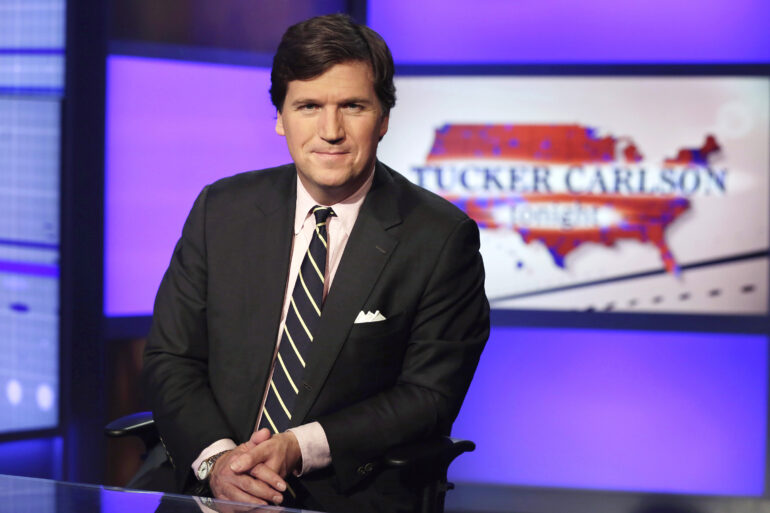
Conservative pundit Tucker Carlson, whose podcast averages over a million viewers per episode, recently interviewed Dane Wigington, a longtime opponent of what he calls “geoengineering.” While the interview has been extensively discredited and mocked in other media coverage, it is only one example of the spike in chemtrail belief.
Although chemtrail belief spans the political spectrum, it is particularly evident in Republican circles. U.S. Secretary of Health and Human Services Robert F. Kennedy Jr. has professed his support for the theory. U.S. Rep. Marjorie Taylor Greene of Georgia has written legislation to ban chemical weather control, and many state legislatures have done the same.
Online influencers with millions of followers have promoted what was once a fringe theory to a large audience. It finds a ready audience among climate change deniers and anti-deep state agitators who fear government mind control.
Heads I win, tails you lose
Although research on weather modification is real, the overwhelming majority of qualified experts deny that the chemtrail theory has any solid basis in fact. For example, geoengineering researcher David Keith’s lab posted a blunt statement on its website. A wealth of other resources exist online, and many of their conclusions are posted at contrailscience.com.
But even without a deep dive into the science, the chemtrail theory has glaring logical problems. Two of them are falsifiability and parsimony.

The philosopher Karl Popper explains that unless your conjecture can be proved false, it lies outside the realm of science.
According to psychologist Rob Brotherton, conspiracy theories have a classic “heads I win, tails you lose” structure. Conspiracy theorists say that chemtrails are part of a nefarious…