
When an Immigration and Customs Enforcement agent shot and killed Renee Nicole Good in south Minneapolis on Jan. 7, 2026, what happened next looked familiar, at least on the surface. Within hours, cellphone footage spread online and eyewitness accounts contradicted official statements, while video analysts slowed the clip down frame by frame to answer a basic question: Did she pose the threat federal officials claimed?
What’s changed since Minneapolis became a global reference point for bystander video in 2020 in the wake of George Floyd’s murder is how thoroughly camera systems, especially smartphones, are now entangled with the wider surveillance ecosystem.
I am a researcher who studies the intersection of data governance, digital technologies and the U.S. federal government. The hard truth for anyone filming law enforcement today is that the same technologies that can hold the state accountable can also make ordinary people more visible to the state.
Recording is often protected speech. But recording, and especially sharing, creates data that can be searched, linked, purchased and reused.
Video can challenge power. It can also attract it.
Targeting the watchers
Documentation can be the difference between an official narrative and an evidence-based public record. Courts in much of the U.S. have recognized a First Amendment right to record police in public while they perform official duties, subject to reasonable restrictions. For example, you can’t physically interfere with police.

An ICE officer tells a photographer to back up.
AP Photo/Adam Gray
However, that right is uneven across jurisdictions and vulnerable in practice, especially when police claim someone is interfering, or when state laws impose distances people must maintain from law enforcement actions – practices that chill filming.
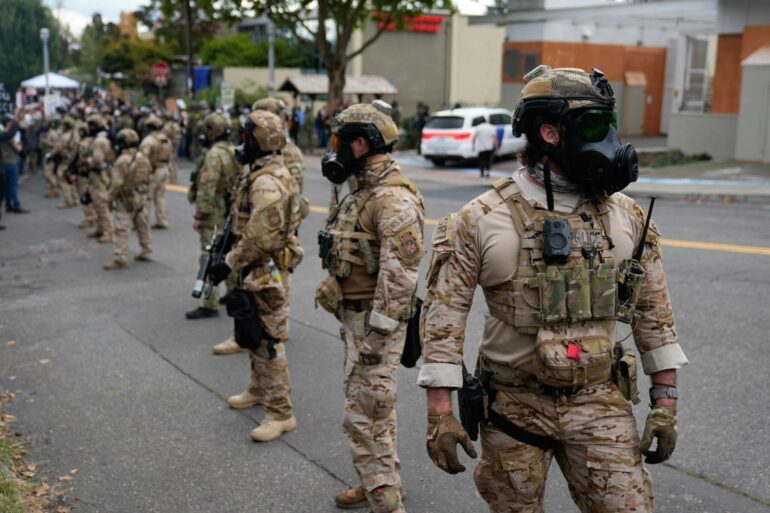
While the legal landscape of recording law enforcement is important to understand, your safety is also a major consideration. In the days after Good’s killing, Minneapolis saw other viral clips documenting immigration enforcement and protests, along with agents’ forceful engagement with people near those scenes, including photographers.

It’s difficult to know how many people have been targeted by agents for recording. In Illinois in late 2025, the U.S. Press Freedom Tracker, operated by advocacy group Freedom of the Press Foundation, documented multiple incidents in which journalists covering ICE-facility protests reported being shot with crowd-control munitions or tackled and arrested while filming.
These incidents underscore that documentation isn’t risk-free. There is an additional layer of safety beyond the physical to take into account: your increased risk of digital exposure. The legal right to record doesn’t prevent your recording from becoming data that others can use.
Both camera and tracking device
In practical terms, smartphones generate at least three kinds of…

