
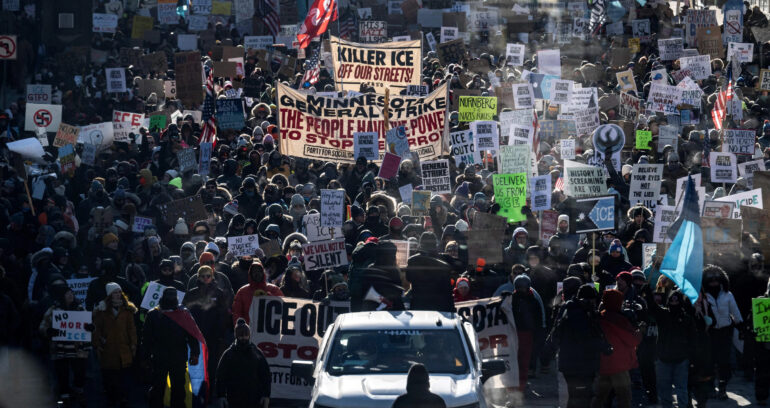
Tens of millions of Americans have now seen video of the killings of Renee Good and Alex Pretti at the hands of federal agents in Minneapolis. The activities organized in response have not been initiated by outside agitators or left-wing zealots, but, rather, by everyday Americans protesting the tactics of federal agents in that city.
These community members are communicating over encrypted messaging apps such as Signal and using their cellphones to record Immigration and Customs Enforcement and Border Patrol officers. Some have been using apps such as ICEBlock to help monitor ICE activities. They are using 3D printers to mass-produce whistles for community members to blow to alert each other when federal agents are in the area.
While the technology in some of these instances is new, this pattern – grassroots activists using the latest technology literally at their fingertips – is older than the republic itself. As a legal scholar who has studied American social movements and their relationship to technology, I see that what regular Americans in Minneapolis are doing is part of a very American tradition: building on trusted interpersonal relationships by harnessing the most recent technology to supercharge their organizing.

The app ICEBlock helps communities share information about the presence of federal officers in their areas. The Apple and Google app stores removed the app in October 2025 at the Trump administration’s request.
Justin Sullivan/Getty Images
From Colonial era to the Civil Rights Movement
As the first stirrings of the American revolutionary spirit emerged in the 1770s, leaders formed the committees of correspondence to coordinate among the Colonies and in 1774 formed the Continental Congress. They harnessed the power of the printing press to promote tracts such as Thomas Paine’s Common Sense. One of the first acts of the new Congress was to create what it called the Constitutional Post, a mail system from the Maine territories to Georgia that enabled the colonists to communicate safely, out of reach of loyalist postmasters.
And the date Americans will be celebrating in 2026 as the 250th anniversary of the United States, July 4, commemorates when the drafters of the Declaration of Independence sent the final document to John Dunlap, rebel printer. In other words, what we celebrate as the birth of our nation is when the founders pressed “send.”
In the 1830s, as the battle over slavery in the new nation began to emerge, a new type of printing press, one powered by steam, helped supercharge the abolitionist movement. It could print antislavery broadsides much more rapidly and cheaply than manual presses.

The introduction of the telegraph in 1848 helped launch the women’s rights movement, spreading word of its convention in Seneca Falls, New York, while similar meetings had not quite caught the public’s imagination.
Fast-forward over 100 years in U.S. history…