
Globally, more than 400 million tons of plastic are produced each year, and less than 10% is recycled. Much of the rest ends up burned, buried or drifting through waterways, a problem that’s only getting worse.
As a civil engineer, I started asking a simple question: Instead of throwing used plastic away, what if we could build something useful with it?
That question led to a technology that mixes small amounts of recycled plastic with asphalt – the black, sticky material used to make roads and parking lots. The result is a stronger road that lasts longer and keeps some used plastic out of the environment.
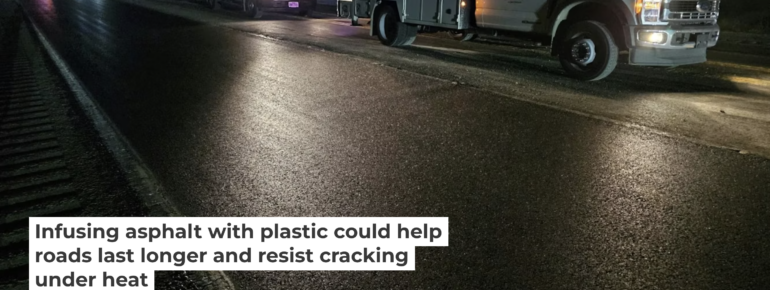
You can see these roads on my university’s campus at the University of Texas at Arlington, where my team has paved test sections in parking lots. Perhaps more importantly for testing this technology at scale, we have constructed a one-mile section of plastic-infused road in Rockwall, Texas, a city near Dallas. We’ve gotten interest from more cities in and outside Texas as well.
My goal is to take one problem – plastic pollution – and use it to fix another: deteriorating roads.
Where the idea came from
I grew up in a low-income neighborhood in Bangladesh, near a large dump site. As a child, I noticed that people living closest to the piles of waste were often sick, while those farther away were healthier.
At the time, I didn’t know the science behind it – I just saw neighbors having to choose between buying medicine and buying dinner. That memory left a long-lasting impact on me.
Years later, when I became an engineer, I learned that poor waste management doesn’t just harm the environment – it harms people. That realization became the foundation of my work.
How plastic roads work
Traditional asphalt is made from a mix of stones, sand and a petroleum-based binder called bitumen, which holds everything together. In my research team’s process, we replace a small part of that bitumen – about 8% to 10% – with melted plastic from everyday items, such single-use plastic bags and plastic bottles. For our plastic road construction project near Dallas, we used 4.5 tons of plastic waste for nearly a mile of a one-lane road.
We first clean the plastic, then shred it into small flakes. Finally, we mix it into the asphalt at high temperatures. These steps ensure that it melts completely and bonds tightly, leaving no loose plastic behind.

This process is like adding rebar to concrete: The plastic adds flexibility and strength. Roads with this mix can better handle extreme temperatures and heavy traffic. In hot places, that means fewer cracks and potholes.
During an extreme heat wave in April 2024, plastic road constructed in Dhaka, Bangladesh, showed no visible signs of distress or cracks, whereas many roads in Bangladesh had visible cracks and distress during the same period.

The team used plastic-infused asphalt to pave a stretch of road.
Md Sahadat Hossain
It also…