
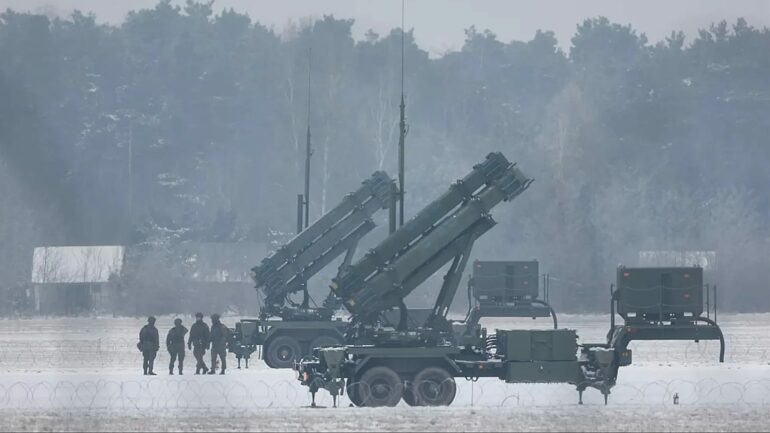
Patriot missile batteries have been the iconic air defense system in the United States’ arsenal for several decades, but evolving threats – from cheap rockets to even cheaper drones – have forced the U.S. and other militaries to develop a range of defensive weapons to match.
In retaliation for ongoing strikes by the U.S. and Israel, Iran has been conducting daily aerial attacks using missiles and drones against Israel and countries in the Persian Gulf region. In December 2025, Iran also launched a large-scale, coordinated raid involving hundreds of missiles and drones against Israel. Hamas launched an even larger assault in October 2023 of many thousands of low-cost rockets and primitive missiles against Israel, overwhelming its highly touted Iron Dome air defense system. And, in the conflict between the Ukraine and Russia, there have been several examples of large-scale drone raids by both sides.
As an engineer who studies defense systems, I see that as the variety and number of missile and drone threats grow, militaries are forced to adapt the defensive side of the equation and respond with matching speed and breadth.
The defensive weapons are components of integrated air defense systems, which include the means to detect and track threats, typically through various forms of radar. Stemming from the Cold War, interceptor missiles have been the established weapon used to disable or destroy the threats.
Well-known examples of air defense systems that use interceptor missiles include the Patriot system and the Israeli Iron Dome. These systems are designed to be effective against small numbers of missiles, including short-range ballistic missiles, as well as aircraft and drones. The U.S. also uses the Terminal High Altitude Area Defense to defend against intermediate range ballistic missiles, including intercepting the missiles before they reenter Earth’s atmosphere.
The Phalanx Close-In Weapon System, shown here in target practice, is an automated machine gun that can defend against drones and missiles.
The numbers
The current conflict in the Gulf provides the latest example of the math at the heart of the air defense challenge. Iran has fired thousands of missiles and drones, and it often requires more than one interceptor to take out an incoming missile. The Gulf states are reportedly running low on interceptors. U.S. stocks are also under pressure, and the United States is reportedly planning to move some interceptors from South Korea to the Gulf region.

Because each interceptor costs several million dollars, it is a losing proposition to use such systems to destroy rockets that only cost US$100,000. Such an asymmetric conflict is not only too expensive on the defensive side, but it is also challenging to replenish interceptors in a timely manner.
In addition, an attacker can overwhelm a defender. In the Hamas attack on Oct. 7, 2023 against Israel,…