
Curious Kids is a series for children of all ages. If you have a question you’d like an expert to answer, send it to [email protected].
Why is water wet? – Philip S., age 12, Northville, Michigan
Spring is often a rainy season. If you get caught in a downpour without an umbrella, you will quickly learn what it means to be wet. But what is it about water that makes it wet?
I am an atmospheric scientist, and water is a fundamental part of the atmosphere. I study storms and wildfires, both of which are closely connected to water.
Why water is wet has to do with how water molecules interact with each other and the things around them.
Wet you can see
Imagine you accidentally spill water on your clothes one day. You will notice two things: First, the water spreads out on the cloth, and the wet part sticks to your body more than the dry part does; and second, the wet area feels cool.
Wet clothes stick to your body and water spreads across the fabric because water molecules are strongly attracted to other molecules, a chemical property called adhesion.
One important reason why water molecules are so attracted to other molecules is that they’re polar. Like a microscopic magnet, one end of the molecule carries a small negative charge, while the other end carries a small positive charge.

Water, also known as H2O, has a slightly negative charge surrounding its oxygen atom and a slightly positive charge around its hydrogen atoms.
Riccardo Rovinetti/Wikimedia Commons, CC BY-SA
Many everyday materials, such as glass, skin and clothing, are also polar. When water touches these surfaces, the electric charges on those materials attract the water molecules and hold them in place. This strong attraction also helps water spread out over surfaces. Whether something feels “wet” to you has to do with how good a liquid is at staying in contact with a surface. Water feels wet because its molecules stick tightly to each other and to your skin.
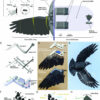
Compared to water, mercury has much weaker attraction to surfaces. Mercury’s molecules are much more attracted to each other, meaning they have very strong cohesion. As a result, mercury does not easily stick to other surfaces.
The cool feeling of being wet comes from evaporation. Liquids need energy to change into gas because they must overcome the forces holding molecules together before they can float away. They take this energy from their surroundings in the form of heat.

As temperature increases, the adhesion between molecules decreases.
OpenStax, CC BY-SA
When you step out of a pool and the water on your swimsuit evaporates, you might feel cold because it’s taking away heat from your body. Wet things often feel cool because evaporation takes heat away from the skin. Sometimes something that feels cool can trick you into thinking it’s also wet, even if no…