

With new generation radioactive-ion beam facilities, previously challenging experiments can be conducted for discovering new isotopes and for revealing physics...
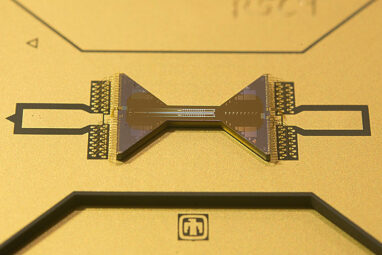
A new cooling technique that utilizes a single species of trapped ion for both computing and cooling could simplify the...
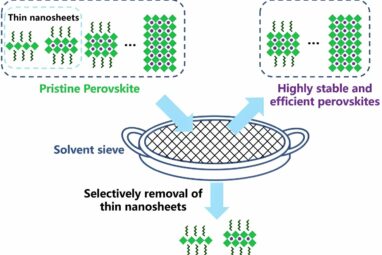
Using a simple solvent sieve method, researchers from the Ningbo Institute of Materials Technology and Engineering (NIMTE) of the Chinese...
Scientists at the U.S. Department of Energy’s (DOE) Brookhaven National Laboratory and DOE’s Pacific Northwest National Laboratory (PNNL) have used...
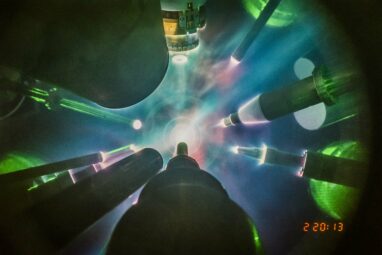
Scientists from the University of Rochester’s Laboratory for Laser Energetics (LLE) led experiments to demonstrate an effective “spark plug” for...
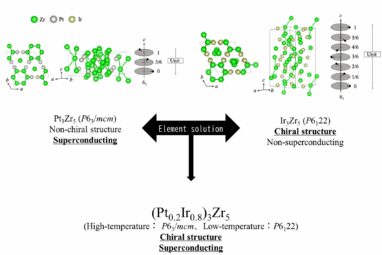
Researchers from Tokyo Metropolitan University have created a new superconductor with a chiral crystalline structure by mixing two materials, one...
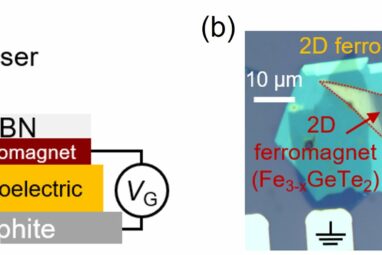
As artificial intelligence technologies such as Chat-GPT are utilized in various industries, the role of high-performance semiconductor devices for processing...
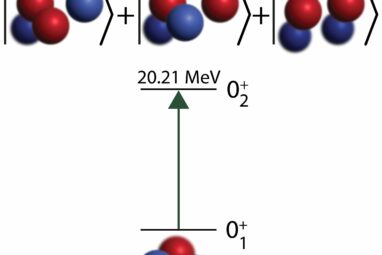
The α particle, also known as helium-4, consists of two protons and two neutrons. Although it is one of the...
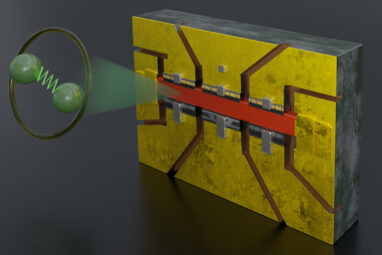
Superconductivity is well understood in so-called “conventional” superconductors. More recent, however, are unconventional superconductors, and it is as yet unclear...
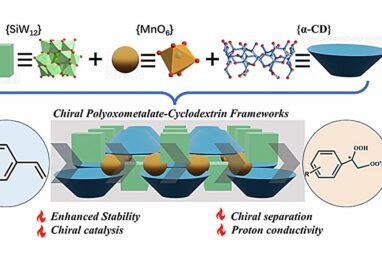
In contrast to conventional mirrors, light can be reflected on surfaces known as metasurfaces without changing its polarization. This phenomenon...
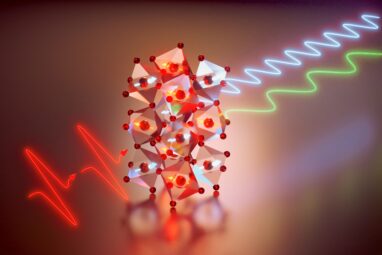
As demands for computing resources continue to increase rapidly, scientists and engineers are looking for ways to build faster systems...
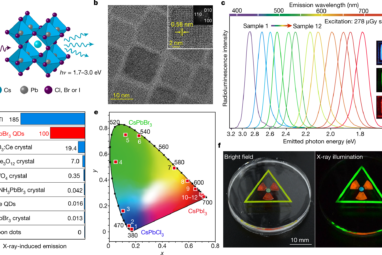
National University of Singapore (NUS) researchers have developed a transmissive thin scintillator using perovskite nanocrystals, designed for real-time tracking and...