
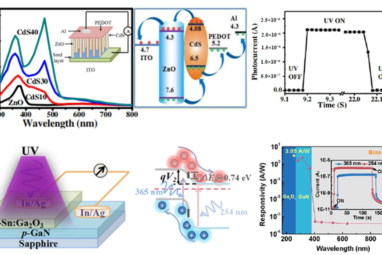
Ultraviolet (UV) light detection can revolutionize industries such as civil engineering, military defense, aerospace exploration, and medical research. The future...
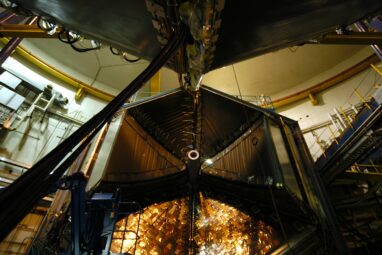
In a unique analysis of experimental data, nuclear physicists have made the first-ever observations of how lambda particles, so-called “strange...
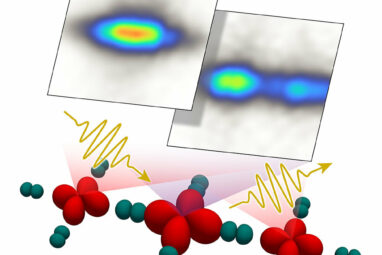
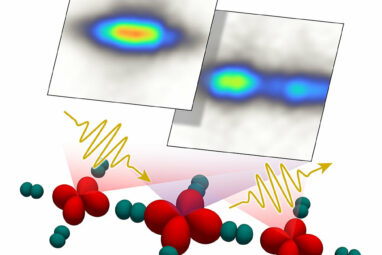
Scientists at the U.S. Department of Energy’s (DOE) Brookhaven National Laboratory have discovered new details about the electrons in a...

An international team of researchers from Leibniz University Hannover (Germany), the University of Twente (Netherlands), and the start-up company QuiX...
Perturbing electron spins in a magnet usually results in excitations called “spin waves” that ripple through the magnet like waves...
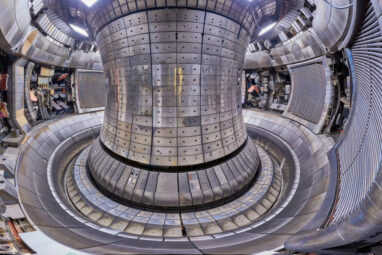
A magnetic cage keeps the more than 100 million degree Celsius hot plasmas in nuclear fusion devices at a distance...
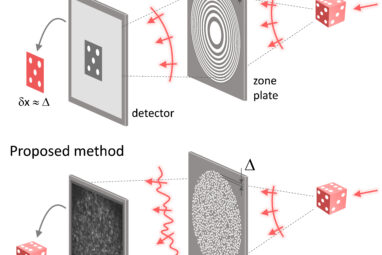
X-ray microscopes have the advantage of penetrating most substances, so internal organs and skeletons can be observed non-invasively through chest...
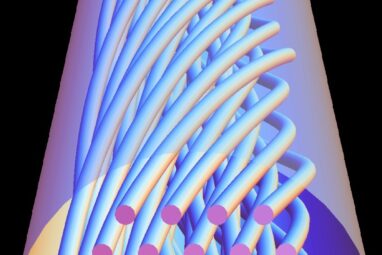
Researchers from two laboratories at ULB have realized a synthetic dimension for light using a fiber optic ring. This ingenious...
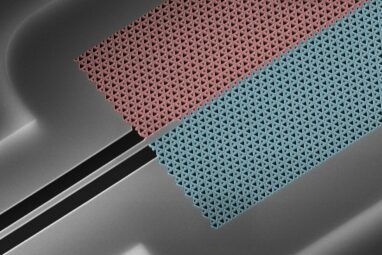
The field of integrated photonics has taken off in recent years. These microchips utilize light particles (photons) in their circuitry...
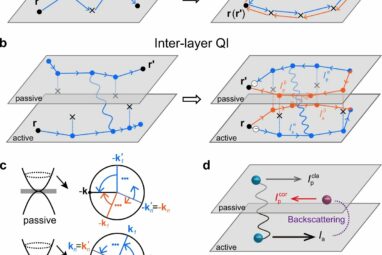
A team led by Prof. Zeng Changgan and Associate Researcher Li Lin from the University of Science and Technology (USTC)...
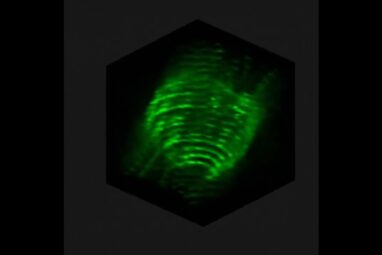
Holography—the use of light projection to display images—can be used to construct holograms, which are three-dimensional structures of light that...
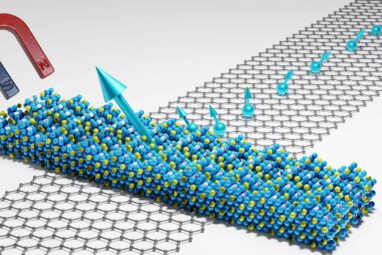
Developing new quantum devices relies on controlling how electrons behave. A material called graphene, a single layer of carbon atoms,...

