Imagine owning a camera so powerful it can take freeze-frame photographs of a moving electron—an object traveling so fast it...
Scientists studying the tracks of particles streaming from six billion collisions of atomic nuclei at the Relativistic Heavy Ion Collider...
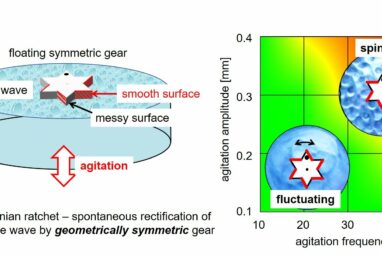
Novel ratchet mechanism uses a geometrically symmetric gear driven by asymmetric surface wettability
The ratchet mechanism is a fascinating energy-conversion system that converts disorderly or random motion into orderly, directed movement through a...
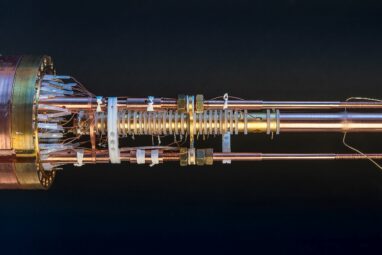
The electron shell of atoms acts as an “electromagnetic shield,” preventing direct access to the nucleus and its properties. A...
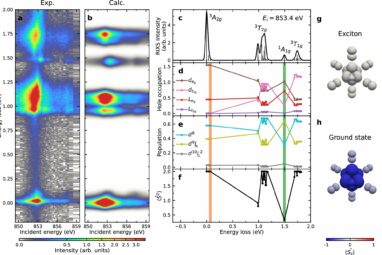
A research group led by scientists at the U.S. Department of Energy’s (DOE) Brookhaven National Laboratory has uncovered details about...
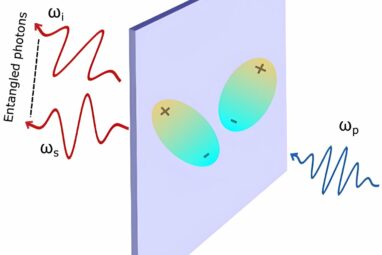
Scientists from the National University of Singapore (NUS) have shown that excitonic resonances and transitions between excitons can significantly increase...

Quantum simulation enables scientists to simulate and study complex systems that are challenging or even impossible using classical computers across...
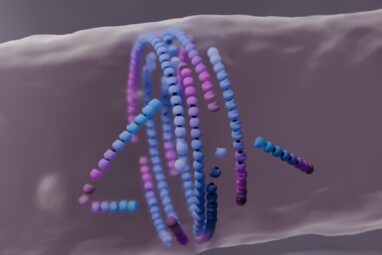
A previously unknown mechanism of active matter self-organization essential for bacterial cell division follows the motto “dying to align”: Misaligned...

Applying chaos theory to the movement of iconic arctic whales uncovered a 24-hour diving cycle and a long-range (~100 km)...
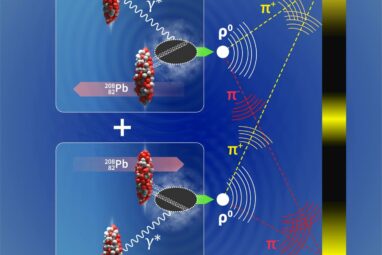
In the famous double-slit experiment, an interference pattern consisting of dark and bright bands emerges when a beam of light...
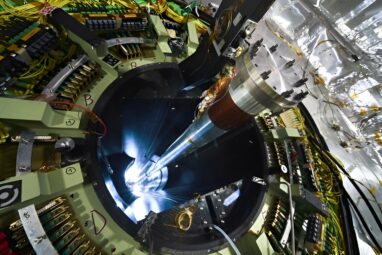
New research using a decommissioned section of the beam pipe from the Large Hadron Collider (LHC) at CERN has brought...
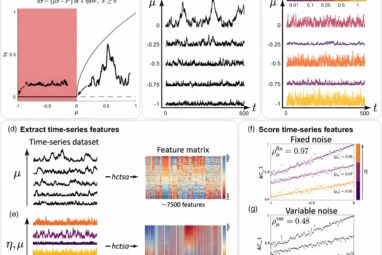
According to the infamous myth, groups of lemmings sometimes run off cliffs to their collective doom. Imagine you are one...