

Microscope images could be obtained much more quickly—rather than one pixel at a time—thanks to a new imaging method for...
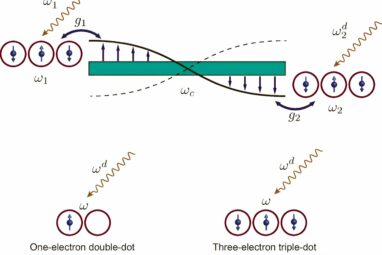
The operation of a quantum computer relies on encoding and processing information in the form of quantum bits—defined by two...

For the past century since their discovery, superconductors and their mysterious atomic properties have left researchers in awe. These special...
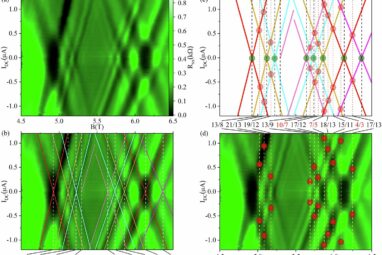
Imagine a two-dimensional flatland, instead of our three-dimensional world, where the rules of physics are turned on their head and...
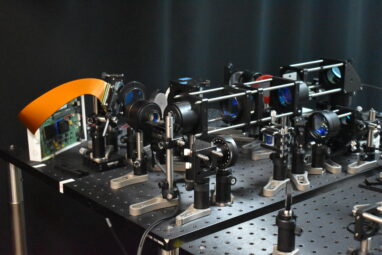
Researchers have developed a new two-photon fluorescence microscope that captures high-speed images of neural activity at cellular resolution. By imaging...

An automated computational approach to the optical lens design of imaging systems promises to provide optimal solutions without human intervention,...
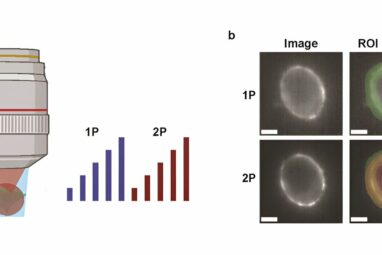
In the quest to unravel the complexities of neural circuits, scientists are beginning to use genetically encoded voltage indicators (GEVIs)...
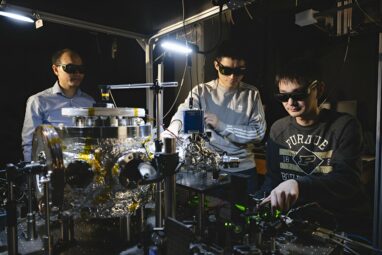
Physicists at Purdue are throwing the world’s smallest disco party. The disco ball itself is a fluorescent nanodiamond, which they...
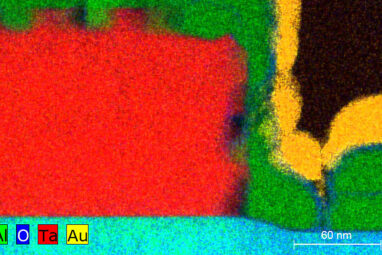
Scientists from Yale University and the U.S. Department of Energy’s (DOE) Brookhaven National Laboratory have developed a systematic approach to...
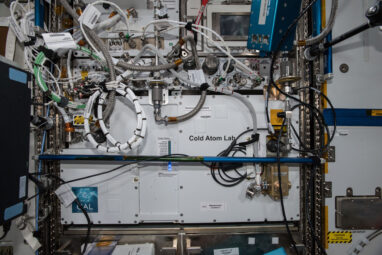
NASA’s Cold Atom Lab, a first-of-its-kind facility aboard the International Space Station, has taken another step toward revolutionizing how quantum...

Light technology is at the heart of many cutting-edge innovations, from high-speed internet to advanced medical imaging. However, transmitting light...
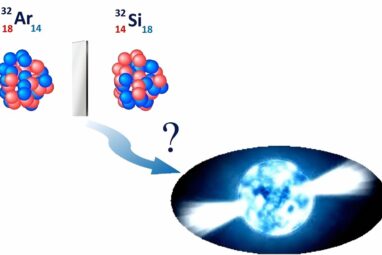
Adding or removing neutrons from an atomic nucleus leads to changes in the size of the nucleus. This in turn...