
In the three years since NASA’s Perseverance rover touched down on Mars, the NASA science team has made the daily...
Star Wars protagonist Luke Skywalker’s childhood might have been slightly less harsh if he’d grown up on a more temperate...

A new computer model mimics moon dust so well that it could lead to smoother and safer lunar robot teleoperations....
Astronomers have discovered one of the most powerful eruptions from a black hole ever recorded. This mega-explosion billions of years...
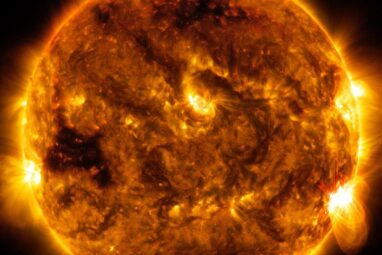
While many studies have compared the magnetic properties of confined and eruptive solar flares, few have considered the thermodynamic properties...
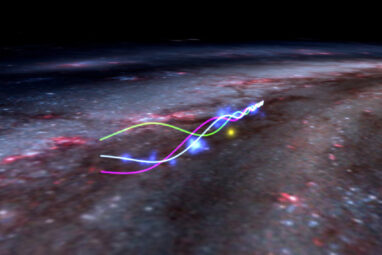
A few years ago, astronomers uncovered one of the Milky Way’s greatest secrets: An enormous, wave-shaped chain of gaseous clouds...
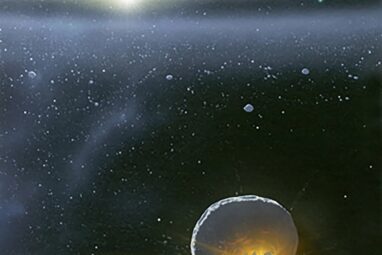
New observations from NASA’s New Horizons spacecraft hint that the Kuiper Belt—the vast, distant outer zone of our solar system...
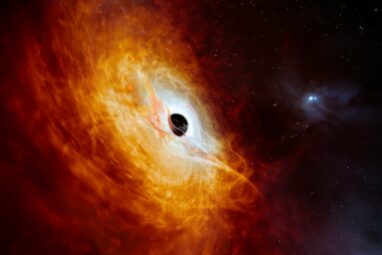
Using the European Southern Observatory’s (ESO) Very Large Telescope (VLT), astronomers have characterized a bright quasar, finding it to be...
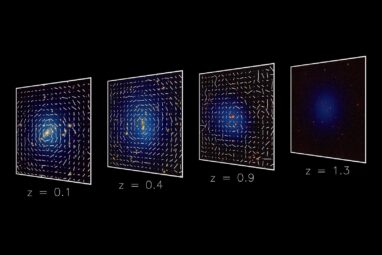
The analysis of how galaxy clusters, the largest objects in the universe, evolve over cosmic time has yielded precise measurements...
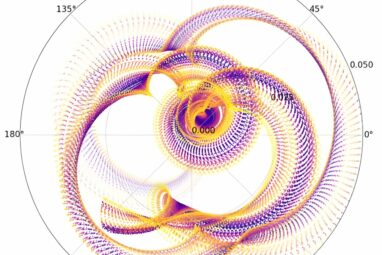
Stars that pass by our solar system have altered the long-term orbital evolution of planets, including Earth, and, by extension,...
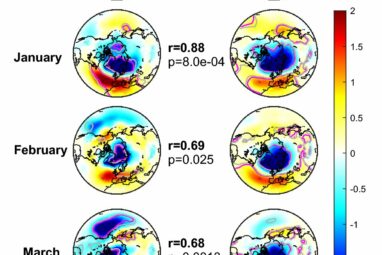
The Space Climate Research Group at the University of Oulu, Finland has been studying the effects of energetic particle precipitation...
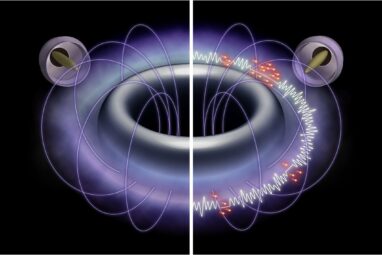
A dipole magnetic field, created by a ring current, is the most fundamental type of magnetic field that is found...