Life on Earth owes its existence to photosynthesis—a process which is 2.3 billion years old. This immensely fascinating (and still...
Few cosmic explosions have attracted as much attention from space scientists as the one recorded on October 22 last year...
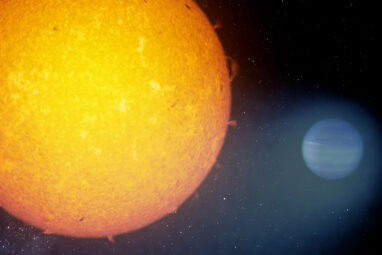
A team of astronomers has used observations from the Hobby-Eberly Telescope (HET) at The University of Texas at Austin’s McDonald...
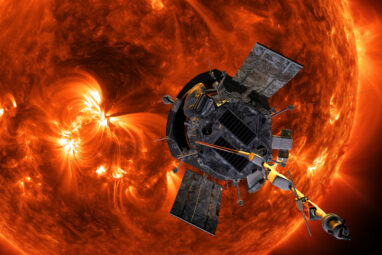
NASA’s Parker Solar Probe (PSP) has flown close enough to the sun to detect the fine structure of the solar...
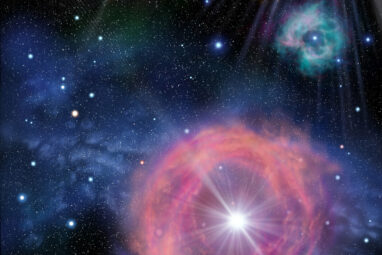
Researchers discover chemical evidence for pair-instability supernova from a very massive first star
The first stars illuminated the universe during the Cosmic Dawn and put an end to the cosmic “dark ages” that...
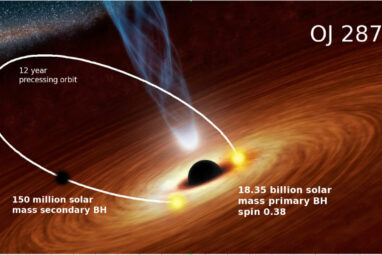
The first direct detection of gravitational waves in 2015 has opened a new window on the universe, enabling in particular...
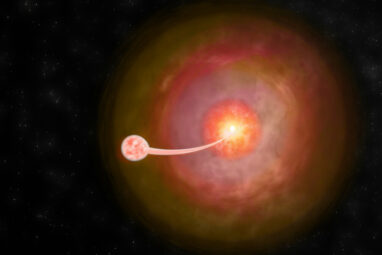
While studying classical novae using the National Radio Astronomy Observatory’s Very Long Baseline Array (VLBA), a graduate researcher uncovered evidence...
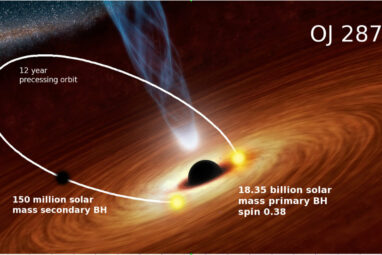
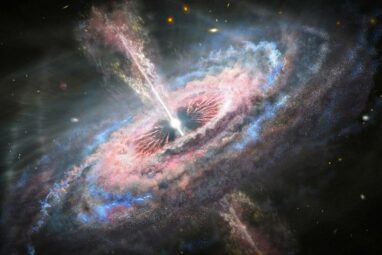
Supermassive black holes that weigh several billion times the mass of our sun are present at the centers of active...
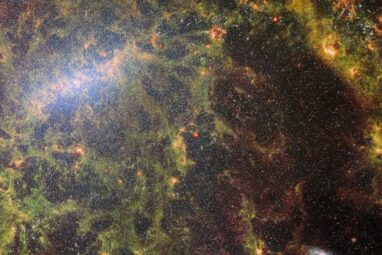
A delicate tracery of dust and bright star clusters threads across this image from the James Webb Space Telescope. The...
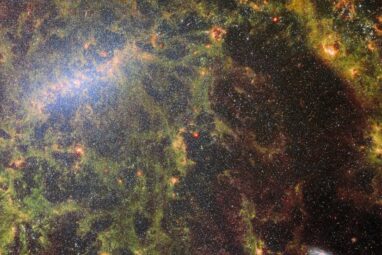
Among the most fundamental questions in astronomy is: How did the first stars and galaxies form? NASA’s James Webb Space...
The digital age has been a tremendous boon to the fields of both statistics and astronomy. However, according to Dr....
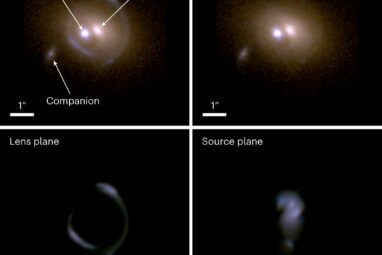
A team of researchers from EPFL have found a way to use the phenomenon of strong gravitational lensing to determine...