The NASA project NEOWISE, which has given astronomers a detailed view of near-Earth objects – some of which could strike...
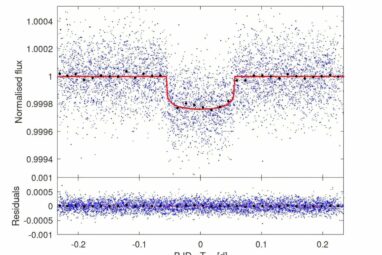
An international team of astronomers has investigated a planetary system consisting of three alien worlds orbiting the star TOI-396. The...
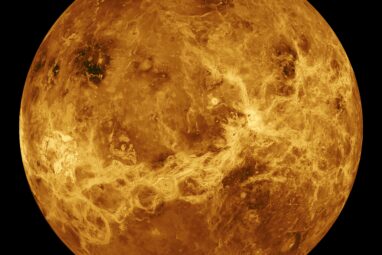
A team of astronomers has found that Venus has never been habitable, despite decades of speculation that our closest planetary...
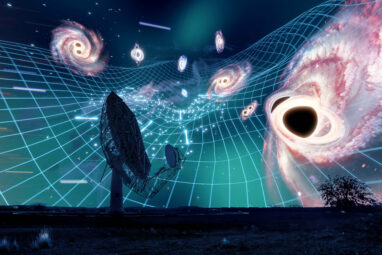
An international study led by astronomers from Swinburne University of Technology has created the most detailed maps of gravitational waves...
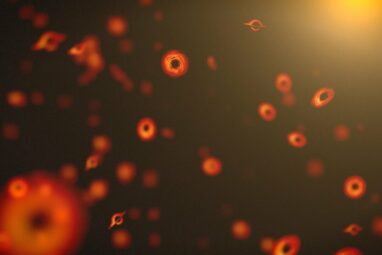
Imagine the formation of a black hole and you’ll probably envision a massive star running out of fuel and collapsing...
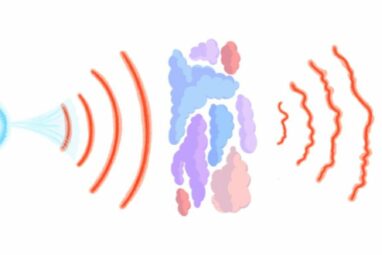
A study that sheds new light on how pulsar signals—the spinning remnants of massive stars—distort as they travel through space,...
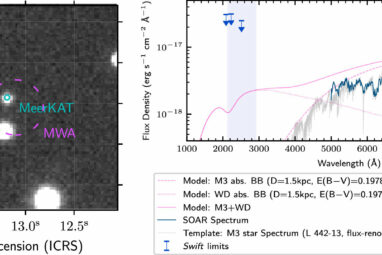
Astronomers may have discovered the explanation for the longest-period radio transient ever detected
Researchers from the Curtin node of the International Center for Radio Astronomy Research (ICRAR) have made a record-breaking astrophysical discovery...
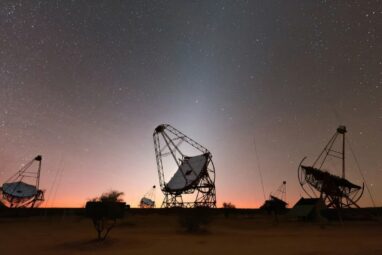
Five telescopes of the H.E.S.S.-collaboration in Namibia are used to study cosmic radiation, especially gamma radiation. With data from 10...
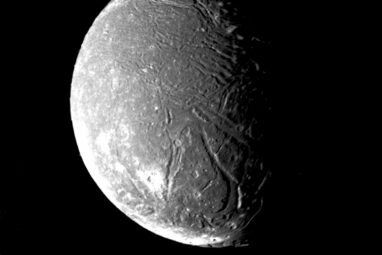
When NASA’s Voyager 2 flew by Uranus in 1986, it captured grainy photographs of large ice-covered moons. Now nearly 40...
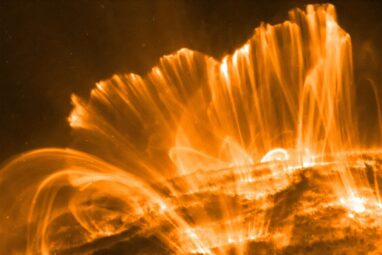
Research by astronomers and computer scientists at the University of Hawaiʻi Institute for Astronomy (IfA) could revolutionize our understanding of...
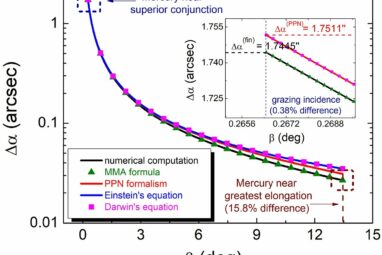
Identifying asteroids on a potential collision course with Earth could be made easier thanks to an advancement in how to...
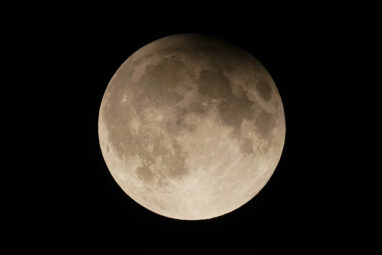
Planet Earth is parting company with an asteroid that’s been tagging along as a “mini moon” for the past two...