
Genetic inheritance may sound straightforward: One gene causes one trait or a specific illness. When doctors use genetics, it’s usually to try to identify a disease-causing gene to help guide diagnosis and treatment. But for most health conditions, the genetics is far more complicated than how clinicians are currently looking at it in diagnosis, counseling and treatment.
Your DNA carries millions of genetic variants you inherit from your parents or develop by chance. Some are common variants, shared by many people. Others are rare variants, found in very few people or even unique to a family. Together, these variants shape who you are – from visible traits such as height or eye color to health conditions such as diabetes or heart disease.
In our newly published research in the journal Cell, my team and I found that a genetic mutation involved in neurodevelopmental and psychiatric conditions such as autism and schizophrenia is affected by multiple other genetic variants, changing how these conditions develop. Our findings support the idea that, rather than focusing on single genes, taking the whole genome into account would provide insight into how researchers understand what makes someone genetically predisposed to certain diseases and how those diseases develop.
Primary and secondary variants
Certain rare variants can cause problems on their own, such as the genetic mutations that cause sickle cell anemia and cystic fibrosis. But in many cases, whether someone actually develops symptoms of disease depends on what else is happening across the genome.
While a primary variant might trigger a disease, secondary variants can alter how that disease develops and progresses. Think of it like a song: The melody (primary variant) is the main part of the song, but the bassist and drummer (secondary variants) can change its groove and rhythm.
That’s why two people with the same genetic mutation can seem so different. One person might have severe symptoms, another person mild symptoms, and another none at all. These variations can even occur within the same family. This phenomenon, called variable expressivity, arises from differences in the secondary variants a person has. In most cases, these variants amplify the effects of the primary mutation. A higher number of secondary variants on top of a primary variant generally leads to more severe disease.

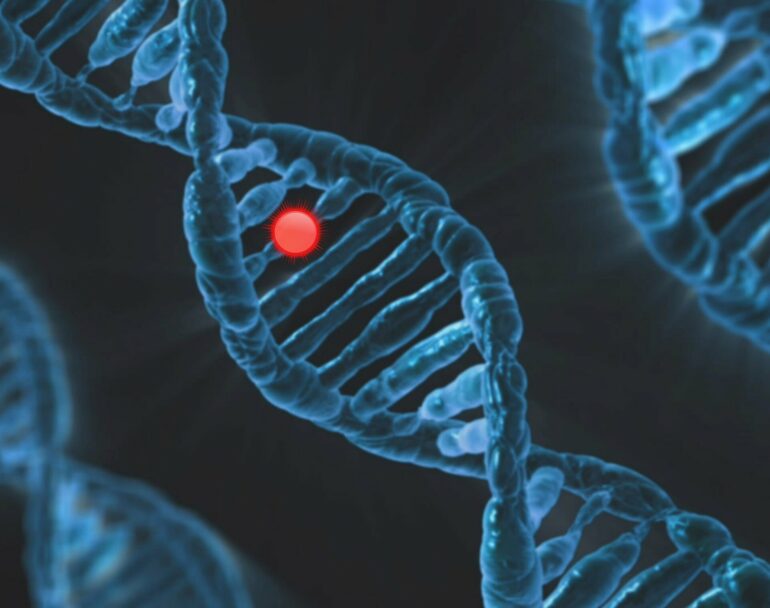
Mutations are a source of genetic variation.
Sometimes, a primary variant and a secondary variant together can cause two different disorders in the same person, such as Prader-Willi syndrome and Pitt-Hopkins syndrome. Other times, secondary variants have no obvious effect on their own but together can tip the balance of whether and how a disease will appear, even in the absence of a primary variant. This can be seen in the development of heart disease in children.
Insights from a missing piece of a chromosome
My team…