
In my work as a veterinary pharmacologist, I never know exactly what I’m going to get when I open my email. It could be a request from a veterinarian asking my team to determine the concentration of a drug to treat the shell of a turtle infected with fungal disease. Or it could be an inquiry from a researcher wondering whether we can help them figure out the dose of antacid they should give goats and sheep with ulcers.
In one email, a veterinarian wanted to know whether we could determine the concentration of an extended-release antibiotic in tigers to determine how to best treat them. Figuring this out would make the difference between trying to give a sick tiger a pill every 12 hours – a difficult task – or a shot once a month.
At our veterinary pharmacology lab, my colleagues and I analyze drug levels in animals from zoos and aquariums nationwide, from tiny mice to majestic elephants and from penguins to farm animals. Whether it’s a dolphin with an infection or a tiger in pain, we help veterinarians determine the right treatment, including how much medicine is best for each animal.
Here’s a peek behind the scenes to experience a day in the life of a veterinary pharmacologist, and what it takes to ensure these creatures get the care they need to thrive.
Beluga milk and antibiotics
One day, I received an email from an aquarium asking whether my team and I could determine the concentration of an antibiotic in milk – specifically beluga whale milk.
Beluga whales live in cold waters throughout the Arctic and are extremely sociable mammals that hunt and migrate together in pods. They are recognized for their distinctive white color and are known as the “canaries of the sea” for the wide variety of sounds they make. Whales like the beluga are at the top of the food chain and play an important role in the overall health of the marine environment. However, these animals are threatened by extinction. There are roughly 150,000 beluga whales left in the world today, and certain populations are considered endangered.
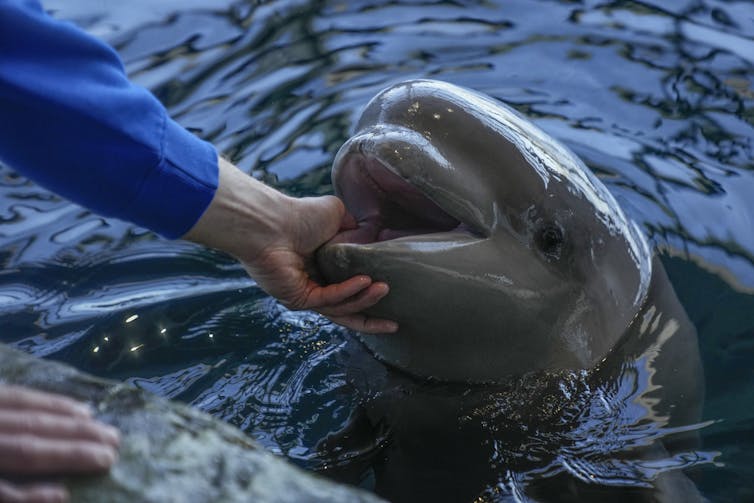
Beluga whales are threatened by extinction.
Erin Hooley/AP Photo
The aquarium reached out to us as part of their research on the factors threatening the sustainability of belugas in the wild and what steps can be taken to protect them. The team there works with animals both in human care and in their natural habitats to improve husbandry methods, understanding of the underwater world and the conservation of aquatic life.

We agreed to try to extract the drug from the milk. However, we first needed a sample of whale’s milk. So, the first question: How do you get milk from a whale? Through my decades of working in this field, my team has studied samples from a wide range of species, but this was the first time someone asked us to analyze whale’s milk.
Unfortunately, I never did find out how they actually got the sample. But I cannot imagine it was easy. The sample we…