
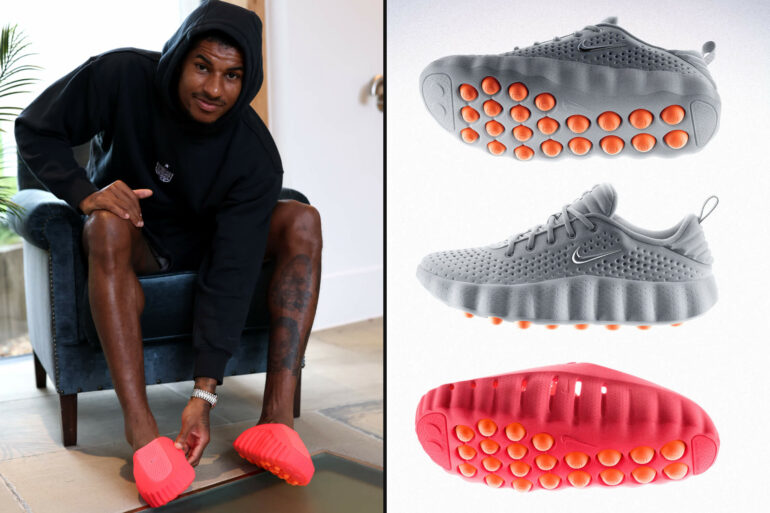
Athletic footwear has entered a new era of ambition. No longer content to promise just comfort or performance, Nike claims its shoes can activate the brain, heighten sensory awareness and even improve concentration by stimulating the bottom of your feet.
“By studying perception, attention and sensory feedback, we’re tapping into the brain-body connection in new ways,” said Nike’s chief science officer, Matthew Nurse, in the company’s press release for the shoes. “It’s not just about running faster — it’s about feeling more present, focused and resilient.”
Other brands like Naboso sell “neuro-insoles,” socks and other sensory-based footwear to stimulate the nervous system.
It’s a compelling idea: The feet are rich in sensory receptors, so could stimulating them really sharpen the mind?
As a neurosurgeon who studies the brain, I’ve found that neuroscience suggests the reality is more complicated – and far less dramatic – than the marketing implies.
Close links between feet and brain
The soles of the feet contain thousands of mechanoreceptors that detect pressure, vibration, texture and movement.
Signals from these receptors travel through peripheral nerves to the spinal cord and up to an area of the brain called the somatosensory cortex, which maintains a map of the body. The feet occupy a meaningful portion of this map, reflecting their importance in balance, posture and movement.
Footwear also affects proprioception – the brain’s sense of where the body is in space – which relies on input from muscles, joints and tendons. Because posture and movement are tightly linked to attention and arousal, changes in sensory feedback from the feet can influence how stable, alert or grounded a person feels.
This is why neurologists and physical therapists pay close attention to footwear in patients with balance disorders, neuropathy or gait problems. Changing sensory input can alter how people move.
But influencing movement is not the same thing as enhancing cognition.

Proprioception is the sense of where your body is in space.
Minimalist shoes and sensory awareness
Minimalist shoes, with thinner soles and greater flexibility, allow more information about touch and body position to reach the brain compared with heavily cushioned footwear. In laboratory studies, reduced cushioning can increase a wearer’s awareness of where their foot is placed and when it’s touching the ground, sometimes improving their balance or the steadiness of their gait.
However, more sensation is not automatically better. The brain constantly filters sensory input, prioritizing what is useful and suppressing what is distracting. For people unaccustomed to minimalist shoes, the sudden increase in sensory feedback may increase cognitive load – drawing attention toward the feet rather than freeing mental resources for focus or performance.
Sensory…