
On Oct. 25, 2023, a 40-year old man named Robert Card opened fire with a semi-automatic rifle at a bowling alley and nearby bar in Lewiston, Maine, killing 18 people and wounding 13 others. Card was found dead by suicide two days later. His autopsy revealed extensive damage to the white matter of his brain thought to be related to a traumatic brain injury, which some neurologists proposed may have played a role in his murderous actions.
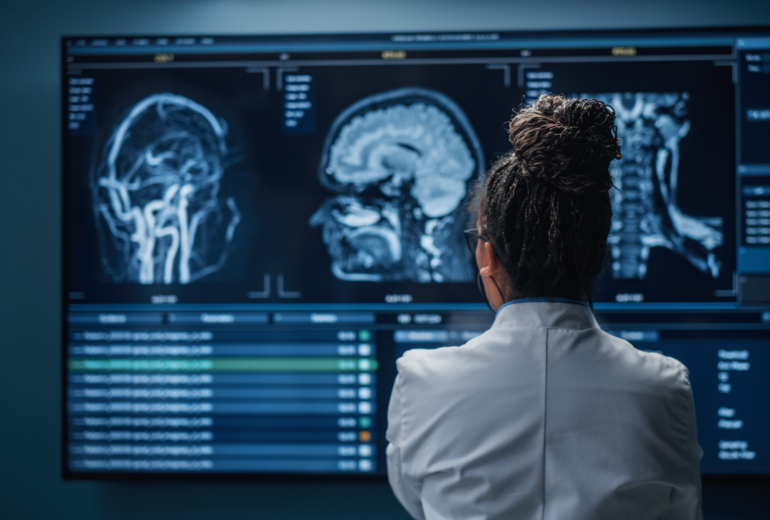
Neurological evidence such as magnetic resonance imaging, or MRI, is widely used in court to show whether and to what extent brain damage induced a person to commit a violent act. That type of evidence was introduced in 12% of all murder trials and 25% of death penalty trials between 2014 and 2024. But it’s often unclear how such evidence should be interpreted because there’s no agreement on what specific brain injuries could trigger behavioral shifts that might make someone more likely to commit crimes.
We are two behavioral neurologists and a philosopher of neuroscience who have been collaborating over the past six years to investigate whether damage to specific regions of the brain might be somehow contributing to people’s decision to commit seemingly random acts of violence – as Card did.
With new technologies that go beyond simply visualizing the brain to analyze how different brain regions are connected, neuroscientists can now examine specific brain regions involved in decision-making and how brain damage may predispose a person to criminal conduct. This work may in turn shed light on how exactly the brain plays a role in people’s capacity to make moral choices.
Linking brain and behavior
The observation that brain damage can cause changes to behavior stretches back hundreds of years. In the 1860s, the French physician Paul Broca was one of the first in the history of modern neurology to link a mental capacity to a specific brain region. Examining the autopsied brain of a man who had lost the ability to speak after a stroke, Broca found damage to an area roughly beneath the left temple.
Broca could study his patients’ brains only at autopsy. So he concluded that damage to this single area caused the patient’s speech loss – and therefore that this area governs people’s ability to produce speech. The idea that cognitive functions were localized to specific brain areas persisted for well over a century, but researchers today know the picture is more complicated.

Researchers use powerful brain imaging technologies to identify how specific brain areas are involved in a variety of behaviors.
As brain imaging tools such as MRI have improved since the early 2000s it’s become increasingly possible to safely visualize people’s brains in stunning detail while they are alive. Meanwhile, other techniques for mapping connections between brain regions have helped reveal coordinated patterns of activity across a…