For many, holidays are synonymous with quality time and long-standing traditions. Typically laden with delicious foods, it’s not uncommon to eat more during the holidays than you usually would.
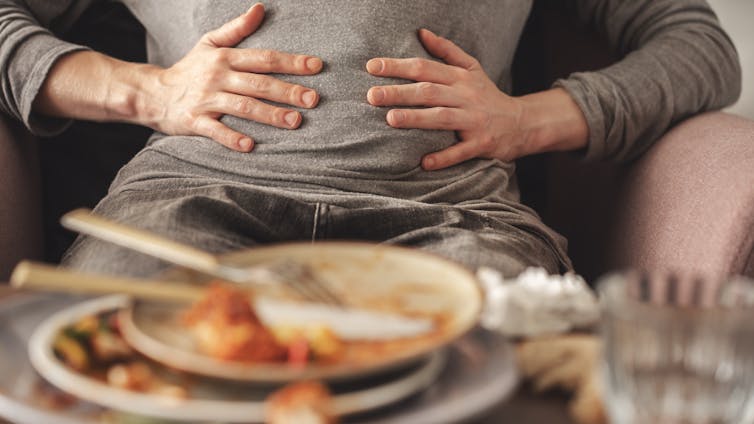
You likely know that feeling of being too stuffed – the point when you’re pleasantly satisfied one moment and uncomfortably full the next. On top of that physical discomfort can come extra helpings of guilt for eating more than you wanted or expected.
The physical and psychological pressure of holiday meals can be challenging. As a registered dietitian, I want to assure you that your body knows what to do with that extra food and drink, and that your overall health and well-being are defined by much more than a few days of indulgence. In fact, the experience of eating and sharing food may play a valuable role in creating lasting, positive memories of the holiday season.
Still, if you’ve ever wondered what’s happening inside your body after a big meal, you’re not alone. Understanding a bit about how digestion works can make the post-meal feelings a little less mysterious and a lot less stressful.
Slowing down digestion
Food is made up of three main macronutrients: carbohydrates, proteins and fats. Your gastrointestinal tract uses both mechanical and chemical processes to break down these nutrients into their simplest form so they can be absorbed and used for energy, repair and carrying out biological functions.

It’s common to eat more than you usually would during a holiday gathering.
The Good Brigade/DigitalVision via Getty Images
When you eat a large holiday meal, you will likely consume more of all the macronutrients than you usually would, in a shorter period of time. The larger quantity of food will require a bit more time to digest, meaning it will move more slowly along your GI tract.
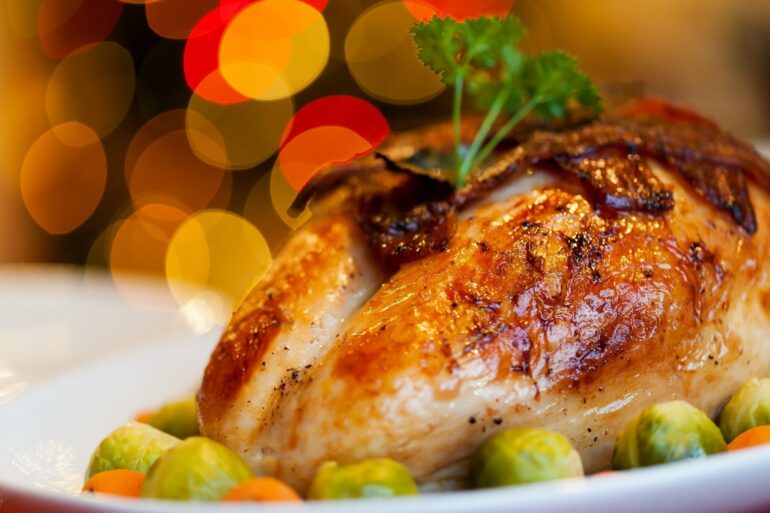
Protein and fats also naturally take longer to break down. While more carbohydrate-rich foods, such as a granola bar or a glass of orange juice, give you a quick burst of energy, adding more protein- and fat-rich foods, such as eggs or chicken, to your meal provides energy that lasts longer.
In this case, the slower digestive process can actually be beneficial for steady energy and appetite control.

Physical discomfort
Rest assured, your digestive system will carry on no matter how big the meal. Rather, the question is how long digestion will take and whether that may cause some temporary discomfort along the way.
When you eat, your stomach stretches to accommodate the food you consumed. As the stomach works to pass food contents into the small intestine, there is an increased chance of heartburn – a backflow of acidic stomach contents that can cause a burning sensation in your chest or sour taste in your mouth. Extra food can also lead to stomach pain, nausea, gas and bloating, as well as a general sluggish feeling.