
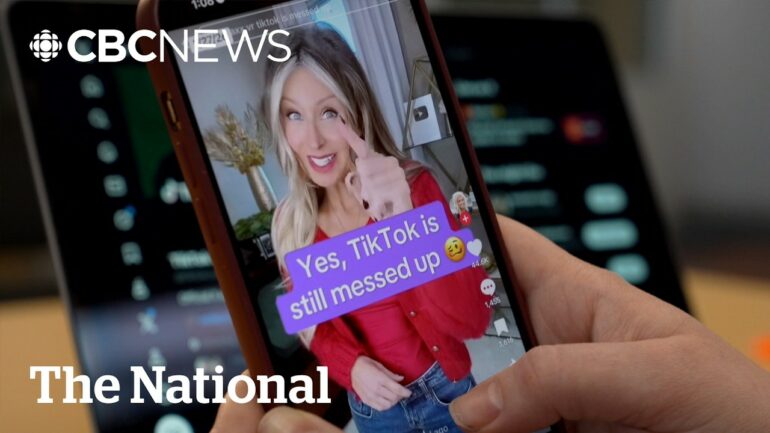
A little over a year after TikTok temporarily went dark in the United States and users were greeted with a message explaining that “a law banning TikTok has been enacted,” those same U.S. users opened the app to find a pop-up message requiring them to agree to new terms before they could continue scrolling.
The new terms of service and privacy policy went into effect on Jan. 22, 2026, following the app’s sale from ByteDance to TikTok USDS Joint Venture LLC, a majority American-owned company that reportedly will control U.S. users’ data and content and the app’s recommendation algorithm.
People see this kind of pop-up all the time, and according to research, the “biggest lie on the internet” is that people ever read anything before clicking “agree.” But given many users’ unease about the ownership change – including fears of swapping Chinese surveillance for U.S. surveillance – it is unsurprising that this time, people paid attention. Screenshots of legal language spread quickly online, accompanied by warnings about sweeping new data collection.
I’m both a TikTok content creator and a tech ethics and policy researcher who has studied website terms and conditions, especially whether people read them (they don’t) and how well they understand them (they also don’t). When I saw the outrage on social media, I immediately dove down a terms of service and privacy policy rabbit hole that had me tumbling into the wayback machine and also looking at similar policies on other apps and TikTok’s policies in other countries.
In the end, I discovered that in the most widely shared examples, the language that sounded most alarming had either hardly changed at all or described practices that are fairly standard across social media.
Some changes aren’t really changes
Consider the list of “sensitive personal information” in TikTok’s new privacy policy, which includes items like sexual orientation and immigration status. Many users interpreted this list as evidence that TikTok had begun collecting more personal data. However, this exact same list appeared in the previous version of TikTok’s U.S. privacy policy, which was last updated in August 2024. And in both cases, the language focuses on “information you disclose” – for example, in your content or in responses to user surveys.

This language is in place presumably to comply with state privacy laws such as California’s Consumer Privacy Act, which includes requirements for disclosure of the collection of certain categories of information. TikTok’s new policy specifically cited the California law. Meta’s privacy policy lists very similar categories, and this language overall tends to signal regulatory compliance by disclosing existing data collection rather than additional surveillance.
Location tracking also prompted concerns. The new policy states that TikTok may “collect precise location data, depending on your settings.” This is a…