
![Infographic] Take data privacy seriously: Here's why | Osano](https://techandsciencepost.com/wp-content/uploads/2025/11/why-people-dont-demand-data-privacy-even-as-governments-and-corporations-collect-more-personal-information-770x1444.jpg)
When the Trump administration gave Immigration and Customs Enforcement access to a massive database of information about Medicaid recipients in June 2025, privacy and medical justice advocates sounded the alarm. They warned that the move could trigger all kinds of public health and human rights harms.
But most people likely shrugged and moved on with their day. Why is that? It’s not that people don’t care. According to a 2023 Pew Research Center survey, 81% of American adults said they were concerned about how companies use their data, and 71% said they were concerned about how the government uses their data.
At the same time, though, 61% expressed skepticism that anything they do makes much difference. This is because people have come to expect that their data will be captured, shared and misused by state and corporate entities alike. For example, many people are now accustomed to instinctively hitting “accept” on terms of service agreements, privacy policies and cookie banners regardless of what the policies actually say.
At the same time, data breaches have become a regular occurrence, and private digital conversations exposing everything from infidelity to military attacks have become the stuff of public scrutiny. The cumulative effect is that people are loath to change their behaviors to better protect their data − not because they don’t care, but because they’ve been conditioned to think that they can’t make a difference.
As scholars of data, technology and culture, we find that when people are made to feel as if data collection and abuse are inevitable, they are more likely to accept it – even if it jeopardizes their safety or basic rights.
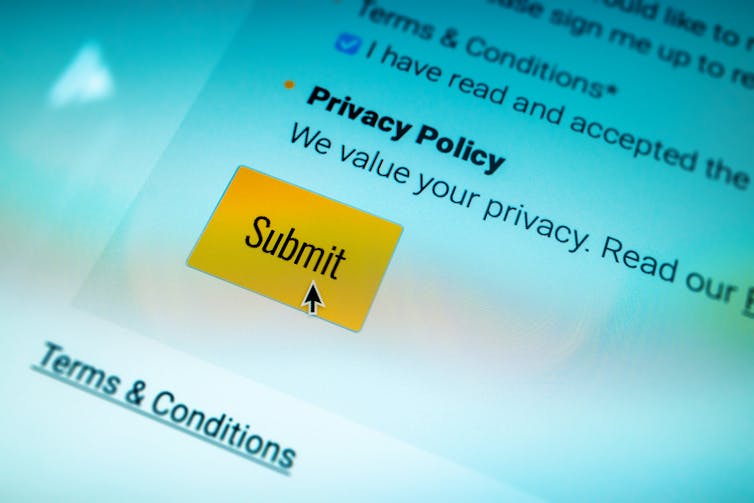
How often do you give your consent to have your data collected?
Sean Gladwell/Moment via Getty Images
Where regulation falls short
Policy reforms could help to change this perception, but they haven’t yet. In contrast to a growing number of countries that have comprehensive data protection or privacy laws, the United States offers only a patchwork of policies covering the issue.
At the federal level, the most comprehensive data privacy laws are nearly 40 years old. The Privacy Act of 1974, passed in the wake of federal wiretapping in the Watergate and the Counterintelligence Program scandals, limited how federal agencies collected and shared data. At the time government surveillance was unexpected and unpopular.

But it also left open a number of exceptions – including for law enforcement – and did not affect private companies. These gaps mean that data collected by private companies can end up in the hands of the government, and there is no good regulation protecting people from this loophole.
The Electronic Communications Privacy Act of 1986 extended protections against telephone wire tapping to include electronic communications, which included services such as email. But the law did not account for the possibility…