
If you use a mobile phone with location services turned on, it is likely that data about where you live and work, where you shop for groceries, where you go to church and see your doctor, and where you traveled to over the holidays is up for sale. And U.S. Immigration and Customs Enforcement is one of the customers.
The U.S. government doesn’t need to collect data about people’s locations itself, because your mobile phone is already doing it. While location data is sometimes collected as part of a mobile phone app’s intended use, like for navigation or to get a weather forecast, more often locations are collected invisibly in the background.
I am a privacy researcher who studies how people understand and make decisions about data that is collected about them, and I research new ways to help consumers get back some control over their privacy. Unfortunately, once you give an app or webpage permission to collect location data, you no longer have control over how the data is used and shared, including who the data is shared with or sold to.
Why mobile phones collect location data
Mobile phones collect location data for two reasons: as a by-product of their normal operation, and because they are required to by law.
Mobile phones are constantly scanning for nearby cell towers so that when someone wants to place a call or send a text, their phone is already connected to the closest tower. This makes it faster to place a call or send a text.
To maintain quality of service, mobile phones often connect with multiple cell towers at the same time. The range of the radio signal from a cell tower can be thought of as a big bubble with the cell tower in the center. The location of a mobile phone can be calculated via triangulation based on the intersection of the bubbles surrounding each of the cell towers the phone is connected to.
In addition to cell tower triangulation, since 2001 mobile phone carriers have been required by law to provide latitude and longitude information for phones that have been used to call 911. This supports faster response times from emergency responders.

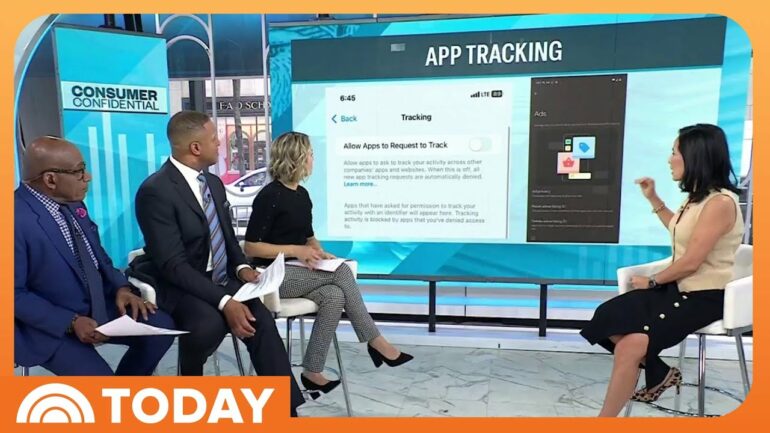
The ‘Today’ show gives an overview of how your phone reveals where you go and what you do.
How location data ends up being shared
When people allow webpages and apps to access location data generated by their mobile phones, the software maker can share that data widely without asking for further permission. Sometimes the apps themselves do this directly through partnerships between the maker and data brokers.
More often, apps and webpages that contain advertisements share location data via a process called “real-time bidding,” which determines which ads are shown. This process involves third parties hired by advertisers, which place automated bids on the ad space to ensure that ads are shown to people who match the profile of interests the advertisers are looking for.
To…

