
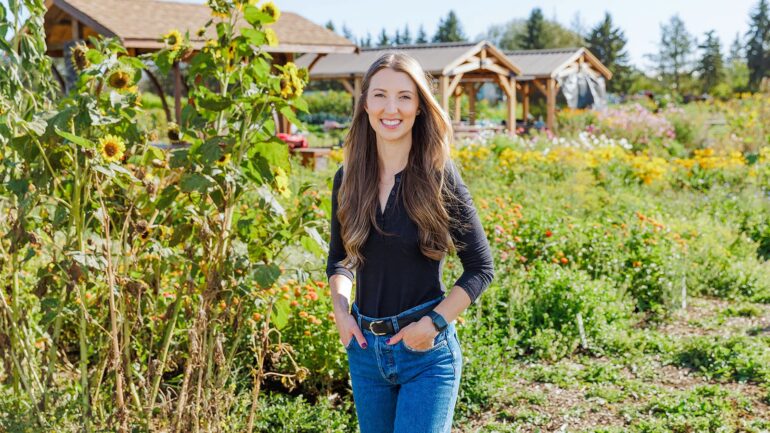
Helping children develop a green thumb could have lifelong health benefits, including preventing cancer, according to new work from a University of Alberta public health researcher.
“We conducted a rapid review of the literature focused on gardening initiatives for children and youth as a primary prevention opportunity to reduce cancer risk as well as build supportive social and physical environments for health more broadly,” explains Christina Gillies, adjunct professor in the School of Public Health, scientist with the Center for Healthy Communities and lead scientist (communities) in Cancer Prevention and Screening Innovation (CPSI) for Primary Care Alberta, formerly Alberta Health Services.
“We’re talking about key modifiable risk factors for cancer and chronic disease like healthy eating, physical activity and less sedentary behavior,” says Gillies.
The research review, published in Public Health, showed that in 48 studies in high-income countries, gardening initiatives improved nutrition-related knowledge and eating behaviors, increased physical activity, decreased sedentary behavior and boosted psychosocial factors like social connection and sense of belonging. The effects on body weight were inconclusive.
Gillies got the idea to investigate the topic after partnering with an Alberta First Nation community on a school-based gardening project to promote intergenerational and land-based learning, support cultural revitalization, and encourage healthy behaviors for students, staff and the broader community.
She and her team at CPSI had also observed high interest in community gardening across Alberta. There are now more than 80 community gardens in Edmonton, including the U of A’s own Green and Gold Community Garden, which grows more than 60 types of vegetables, herbs and flowers with the help of volunteers.
Gillies says gardens are challenging to initiate and maintain in school and community settings because of barriers such as a lack of human, land and financial resources.
“It is so important to have a champion or champions that really initiate and carry through the process,” she says. “It’s very difficult to transition these initiatives from one-off projects to sustained public health interventions.”
A secondary equity-focused analysis of the studies is currently under review for publication, but Gillies says it shows that effective gardening initiatives for children and youth engage parents, peers and family members and foster community partnerships. It also reinforces the importance of equity-related factors like gender, socioeconomic status, race, ethnicity and culture.
“What that study showed me is that to equitably improve living conditions and health outcomes, it is really important that gardening initiatives be designed alongside communities that are most affected by health inequities,” she says.
Gillies plans to do further long-term studies to determine the best way for gardening initiatives to support and sustain positive lifestyle changes into adulthood and improve health outcomes.
She’s also recently begun to tap into the benefits of community gardening herself, by volunteering at the Laurier Heights Food Forest with her 3-year-old daughter and husband. The community orchard started by volunteers has raspberries, apples, haskaps, saskatoons and flowers growing there.
“While I’m weeding, my daughter is harvesting berries and trying new things. She doesn’t stop moving the whole time, and neither do I. We’re getting that physical activity as well as really enhanced community connection by meeting our neighbors,” says Gillies.

She encourages others to give it a try.
“It’s a wonderful place to meet other people in your community while also experiencing connection to the land, moving your body, and trying different foods. There are really so many benefits!”
More information:
Christina Gillies et al, Gardening initiatives as an approach to cancer prevention for children and youth, Public Health (2025). DOI: 10.1016/j.puhe.2025.03.015
Provided by
University of Alberta
Citation:
Developing a green thumb while young can prevent cancer, study finds (2025, October 15)