
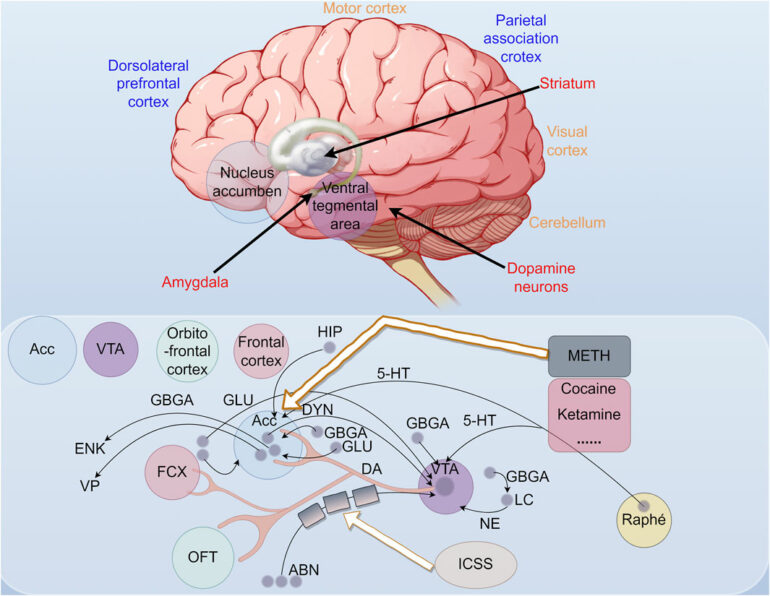
Methamphetamine doesn’t just spike levels of the pleasure-inducing hormone dopamine in the reward pathways of the brain – it also provokes damaging brain inflammation through similar mechanisms.
Meth is addictive because it increases dopamine levels in the brain. While researchers know that meth triggers brain inflammation, whether the immune system also affects the brain’s reward system during drug use has been unclear.
Our work focuses on how dopamine is regulated in the body and the reward pathways of the brain. Dopamine shapes motivation, movement, learning and cognition, and its disruption is linked to a range of neurological and neuropsychiatric disorders, including substance use disorders, ADHD, autism and Parkinson’s disease.
By identifying that meth elevates levels of a key immune molecule that drives both neuroinflammation and dopamine release, our recent findings offer a potential target to treat meth addiction and reduce relapse.

The pleasure of meth comes at a steep cost for body and brain.
James C Hooper/Moment via Getty Images
Dopamine and inflammation
To study how meth and the immune system interact and regulate dopamine levels, we measured the electrical and chemical activity of dopamine neurons in mouse brain specimens treated with either meth or an immune molecule called TNF-α. This molecule is known to induce inflammation in the body.
We found that meth and TNF‑α converge in a part of the brain called the ventral tegmental area, a key reward hub that produces dopamine. In this area of the mouse brain, TNF‑α increased dopamine levels and neuronal activity in similar ways as meth.
These effects depended on two proteins that act as gatekeepers to control the activity of dopamine neurons and dopamine levels. Blocking these gatekeepers disrupted the effects of TNF-α and meth on dopamine neurons.


The ventral tegmental area (orange, near the center of the brain) releases dopamine through multiple pathways.
Casey Henley/Foundations of Neuroscience, CC BY-NC-SA
Our team’s 2025 review of the research on this field adds broader context to our findings: Meth elevates TNF‑α in the brain and the body, and TNF‑α is known to weaken the blood‑brain barrier that regulates which substances can access the brain. If TNF‑α loosens the blood-brain barrier, inflammatory molecules from the blood – as well as disease-causing pathogens – may have increased access to the reward circuitry of the brain, potentially worsening neuronal damage and dysfunction over time.
Importantly, we found that blocking TNF‑α can reduce dopamine release and blunt meth’s effects on dopamine neurons.
Improving treatments for addiction
There is currently no medication for meth addiction that is approved by the Food and Drug Administration. Our findings highlight the role of the immune system in the brain’s reward circuitry, pointing to…