
Throughout history, crises have often led to collapse—but not always. An international team of researchers, including members of the Complexity Science Hub (CSH), highlights four cases where societies under extreme pressure avoided breakdown through adaptive reforms, identifying three key factors that helped them “turn the tide.”
Today, as the world faces interconnected challenges—including climate change, ecological shocks, violent conflict, economic disruptions, and political polarization—understanding how societies navigate crises is increasingly relevant.
“Studying historical cases of societies averting collapse is not just intellectually fascinating; it also offers insights for contemporary policy,” says Peter Turchin, head of the Social Complexity and Collapse research group at CSH.
Learning from historical recoveries
“Historians and social scientists typically focus on dramatic collapses and violent revolutions. But in this study, we shifted the lens to analyze historical instances where societies facing high pressures managed to mitigate widespread violence and disruption through adaptive reforms,” says CSH Associate Faculty member Daniel Hoyer.
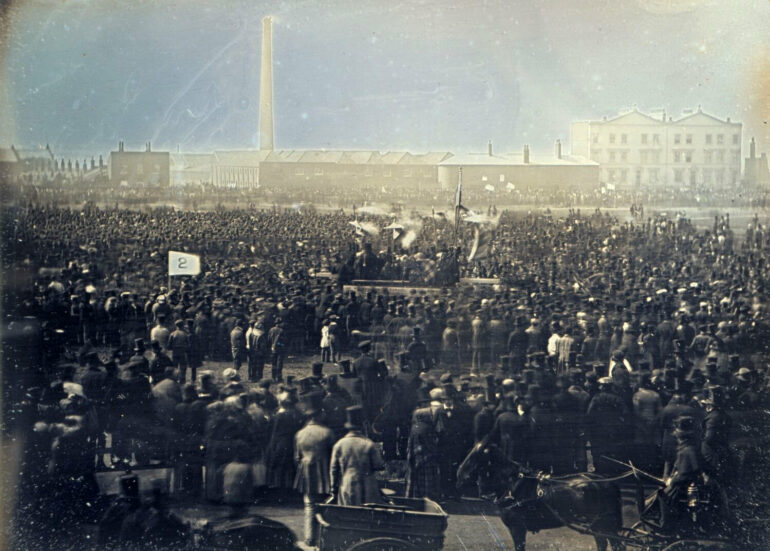
The study, published in Cliodynamics: The Journal of Quantitative History and Cultural Evolution, highlights four such cases: early Republican Rome, 19th-century England during the Chartist movement, Russia in the mid-19th-century Reform Period, and the U.S. Progressive Era.
Three factors behind successful reform
Using data from the Seshat Databank, a comprehensive collection of information on societies throughout human history, the researchers explored how these societies implemented reforms to restore stability and identified three internal factors critical to societal resilience:
Elite willingness to sacrifice:
A significant proportion of those in power recognized the early signs of unrest and were willing to enact substantial institutional reforms, even at the cost of some personal wealth or privilege. This “buy-in” from elites, particularly in the early stages of a crisis, proved critical in preventing a spiral into more destructive conflict.
Comprehensive institutional reforms:
Broad, interconnected reforms were implemented that addressed multiple sources of social stress simultaneously . These were not mere “stop-gap” measures, but significant alterations to political, economic, social, and military structures, such as land redistribution, debt forgiveness, expanded political representation, and labor protections.
State capacity to sustain reforms:
Equally crucial was the state’s ability to enforce, institutionalize, and maintain these reforms. Expanding bureaucratic structures, implementing fiscal reforms, and passing subsequent legislation ensured that initial measures led to lasting stability, as seen most notably in England and the U.S.
Examples of these reforms include the expansion of representative government and redistribution of resources in early Republican Rome and Chartist-era England; labor laws in 19th-century industrializing England and the early 20th-century United States; and the emancipation of serfs in Russia under Alexander II. These measures improved the living conditions of large segments of the population, while also reducing competition among elites by creating opportunities for new actors to gain social influence.
“The irony here is that at the very point where reform is most needed, those with the greatest power to enact it are often least inclined to do so,” notes Jenny Reddish, co-author and scientist at CSH.
“However, our findings suggest that giving up some privileges in the short term can lead to greater overall stability and well-being in the long term, benefiting all segments of society.”
Discover the latest in science, tech, and space with over 100,000 subscribers who rely on Phys.org for daily insights.
Sign up for our free newsletter and get updates on breakthroughs,
innovations, and research that matter—daily or weekly.
External factors also played a role
However, the researchers note that external factors, which both shaped and constrained options, also contributed to these outcomes.
In all four cases, territorial expansion in the decades before the crises provided additional resources that states could use to implement reforms and manage unrest. Wars and conquests also affected population dynamics: the loss of life and the outward migration of people reduced social pressure on labor markets.

Moreover, the constant presence of external threats required those in power to maintain a cohesive, capable, and engaged population that could be mobilized if needed. In this sense, external pressures sometimes indirectly encouraged elites to support reforms that strengthened social stability. For example, Rome and England were able to “export” parts of their populations abroad, easing population pressures and creating space for economic and social reforms at home.
Relevance for today
“Our work demonstrates that while the pressures leading to societal crises are often predictable, the outcomes are not predetermined,” says Hoyer, who is also founder and director of Societal Dynamics (SoDy).
“These ‘averted crises’ provide a crucial counter-narrative, showing that even in the face of immense popular immiseration, elite overproduction—when a society produces more potential elites than there are positions of power or influence—and state fiscal distress, societies can find pathways to stability and renewed well-being.”
The study emphasizes that “averted” crises rarely produced perfect or permanent solutions; inequalities often persisted. Still, historical examples highlight approaches that can inform contemporary policy.
“As societies face overlapping crises today, the lessons from these past cases offer guidance for maintaining stability and supporting more resilient, equitable futures,” concludes Hoyer.
More information:
Daniel Hoyer et al, CRISES AVERTED. How A Few Past Societies Found Adaptive Reforms in the Face of Structural-Demographic Crises, Cliodynamics: The Journal of Quantitative History and Cultural Evolution (2025). DOI: 10.21237/c7clio.38365
Provided by
Complexity Science Hub Vienna
Citation:
When collapse wasn’t inevitable: How some societies turned crisis into renewal (2025, October 30)