
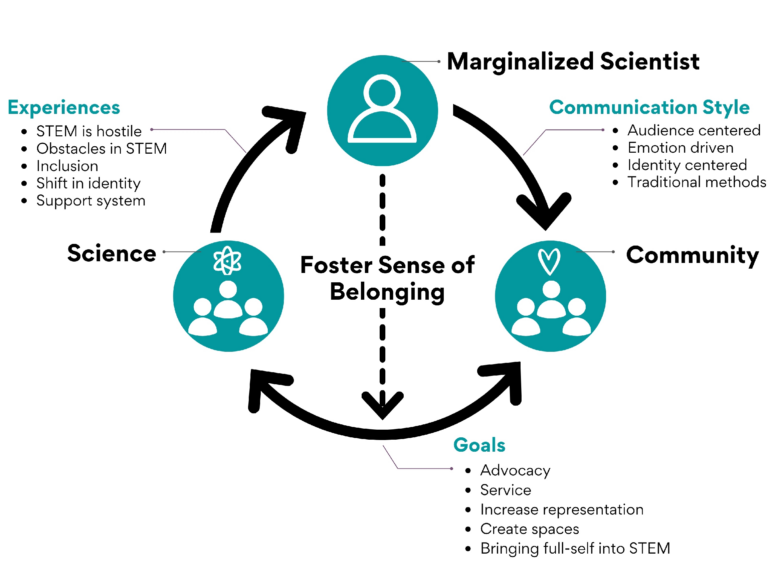
Lived experiences shape how science is conducted. This matters because who gets to speak for science steers which problems are prioritized, how evidence is translated into practice and who ultimately benefits from scientific advances. For researchers whose communities have not historically been represented in science – including many people of color, LGBTQ+ and first-generation scientists – identity is intertwined with how they engage in and share their work.
As researchers who ourselves belong to communities that have been underrepresented in science, we work with scientists from marginalized backgrounds to study how they navigate STEM – science, technology, engineering and math – spaces. What happens when sharing science with the public is treated as relationship-building rather than a one-way transfer of information? We want to understand the role that identity plays in building community in science.
We found that broadening the ways scientists work with the public can bolster trust in science, expand who feels they belong in STEM spaces and ensure that science is working in service of community needs.
STEM spaces as an obstacle course
Science communication involves bridging knowledge gaps between scientists and the broader community. Traditionally, researchers do it through public lectures, media interviews, press releases, social media posts or outreach events designed to explain science in simpler terms. The goals of these activities are often to correct misconceptions, increase scientific literacy and encourage the general public to trust scientific institutions.
However, science communication can look different for researchers from marginalized backgrounds. For these scientists, the ways they engage with the public often focus on identity and belonging. The researchers we interviewed spoke about hosting bilingual workshops with local families, creating comics about climate change with Indigenous youth and starting podcasts where scientists of color share their pathways into STEM.
Instead of disseminating science information through traditional methods that leave little room for dialogue, these researchers seek to bring science back to their communities. This is in part because scientists from historically marginalized backgrounds often face hostile environments in STEM, including discrimination, stereotypes about their competence, isolation and a lack of representation in their fields. Many of the researchers we talked to described feeling pressure to hide aspects of their identities, being seen as the token minority, or having to constantly prove they belong. These experiences reflect well-documented structural barriers in STEM that shape who feels welcome and supported in scientific environments.


Nic Bennett, CC BY-NC-ND
We wanted to see if a broader definition of science communication that incorporates identity as an asset can expand who feels welcomed in scientific…