
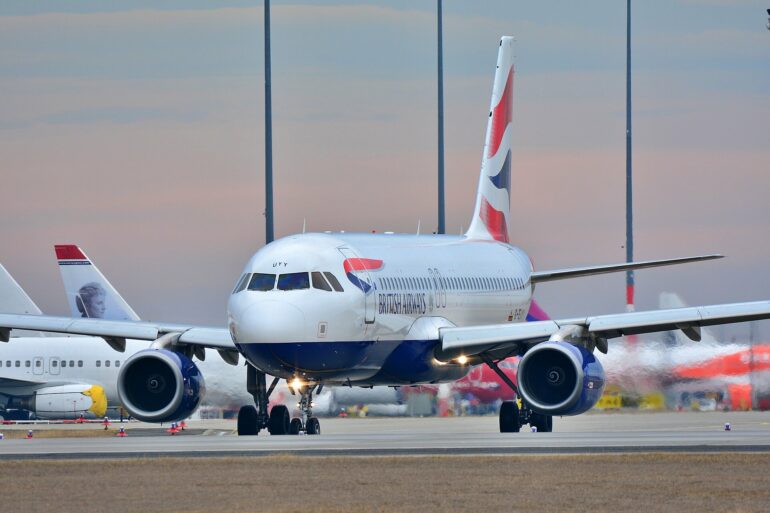
Approximately 185,000 people have died in civilian aviation accidents since the advent of powered flight over a century ago. However, over the past five years among the U.S. airlines, the risk of dying was almost zero. In fact, you have a much better chance of winning most lotteries than you do of dying as a passenger on a U.S. air carrier.
How did flying get so safe? And can we apply the hard-earned safety lessons from aviation to artificial intelligence?
When humanity introduces a new paradigm-shifting technology and that technology is rapidly adopted globally, the future consequences are unknown and often collectively feared. The introduction of powered flight in 1903 by the Wright brothers was no exception. There were many objections to this new technology, including religious, political and technical concerns.
It wasn’t long after powered flight was introduced that the first airplane accident occurred – and by not long I mean the same day. It happened on the Wright brothers’ fourth flight. The first person to die in an aircraft accident was killed five years later in 1908. Since then, there have been over 89,000 airplane accidents globally.
I’m a researcher who studies air travel safety, and I see how today’s AI industry resembles the early – and decidedly less safe – years of the aviation industry.
From studying accidents to predicting them
Although tragic, each accident and each fatality represented a moment for reflection and learning. Accident investigators attempted to recreate every accident and identify accident precursors and root causes. Once investigators identified what led up to each crash, aircraft makers and operators put safety measures into effect in hopes of preventing additional accidents.
For example, if a pilot in the earlier era of flight forgot to lower the landing gear prior to landing, a landing accident was the likely result. So the industry figured out to install warning systems that would alert pilots about the unsafe state of the landing gear – a lesson learned only after accidents. This reactive process, while necessary, is a heavy price to pay to learn how to improve safety.
Over the course of the 20th century, the aviation world organized and standardized its operations, procedures and processes. In 1938, President Franklin Roosevelt signed the Civil Aeronautics Act, which established the Civil Aeronautics Authority. This precursor to the Federal Aviation Administration included an Air Safety Board.

The fully reactive safety paradigm shifted over time to proactive and eventually predictive. In 1997, a group of industry, labor and government aviation organizations formed a group called the Commercial Aviation Safety Team. They started to look at the data and attempted to find trends and analyze user reports to identify risks and hazards before they became full-blown accidents.
The group, which includes the FAA and NASA, decided early on that there would be no competition…