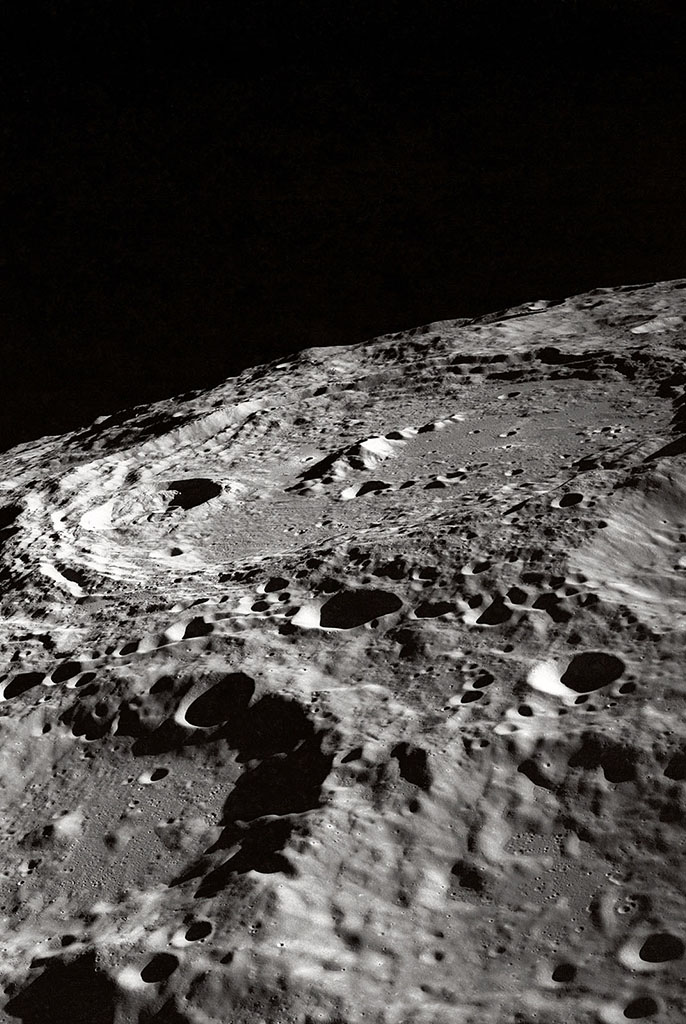

The most exciting landmark scientific achievements don’t happen without researchers sharing and collaborating with others outside their field. When people first landed on the Moon in 1969, Neil Armstrong’s first footsteps marked the realization of a century-long vision that integrated a variety of scientific fields. Landing on the Moon required expertise in electrical, mechanical, chemical and computer engineering, as well as astronomy and physics.
Similarly, the advances in genetics that have made the biotechnology revolution possible involved contributions from disciplines as far ranging as biology, mathematics and statistics, chemistry and computer science.
Today, some of the biggest challenges that scientists face are interdisciplinary in nature – from studying the effects of climate change to managing generative artificial intelligence.
Climate change isn’t only an environmental problem, just like the impact of AI isn’t solely technological. Scientists in a variety of disciplines can independently come up with ways to examine these issues, but as research has shown, the most effective approaches often integrate multiple fields.
Our own interdisciplinary team of researchers in economics and informatics – itself an interdisciplinary field focused on technology, information and people – explored the career hurdles that many interdisciplinary researchers face in a study published in July 2024. We studied how these challenges affect their careers and the production of interdisciplinary research.
Infrastructure and interdisciplinary work
Government and private funders alike have introduced programs to support interdisciplinary work. Universities foster interdisciplinary research through joint appointments, hiring multiple faculty at once, centers that span disciplines, and graduate programs that join different fields.
With these efforts, you might expect a high demand and exceptional career outcomes for interdisciplinary researchers. However, this does not appear to be the case. The American academic system is still very much dominated by disciplines and academic departments. A researcher whose work doesn’t fit neatly into a category can easily fall through the cracks.
The structure of distinct disciplines and departments is deeply embedded in universities. Many researchers have trouble finding a journal willing to publish interdisciplinary papers or a department willing to offer interdisciplinary classes. Students interested in this work have difficulty finding mentors.


Interdisciplinary researchers may have a harder time publishing their work.
Maggie Villiger, CC BY-ND
When interdisciplinary researchers apply for jobs, promotion and tenure, hiring committees made up of members of a single discipline may have difficulty evaluating their work. That issue can put these researchers at a disadvantage, compared to candidates with more traditional backgrounds.
Interdisciplinary…