
Curious Kids is a series for children of all ages. If you have a question you’d like an expert to answer, send it to [email protected].
How is paint made? – Atharva, age 11, Bengaluru, India
Did you ever mix dirt and water when you were playing outside? You made a paint. Did you draw shapes on the ground with your muddy hands? You made a painting.
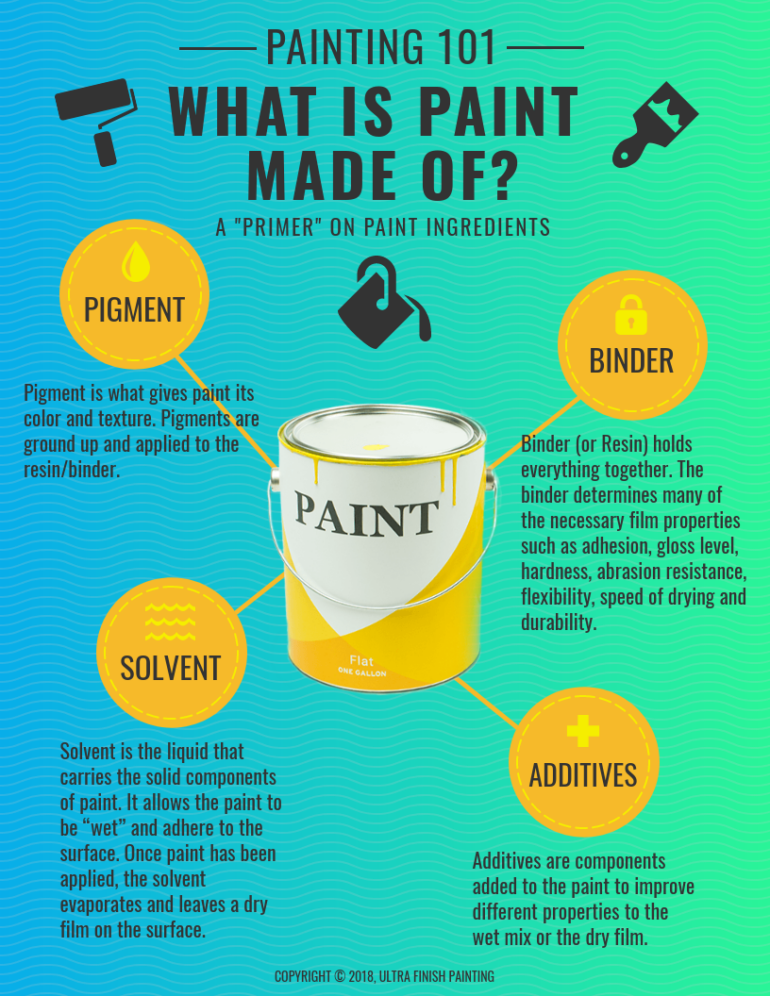
Paint is made by combining a colorful substance – a pigment – with another material that binds the color together and helps spread that color onto surfaces such as paper, fabric or wood. Pigments can be found everywhere – in rocks and minerals, plants or insects. Some colors are made by scientists in laboratories.
Long ago, artists made their own paints by mixing pigments with natural materials such as water, oil or egg yolk to hold the colors together in a paste. Artists today can still make their own paints, or they can order them from factories that mix, package and ship paint all over the world. Paint companies use large, industrial machines to grind pigments and binders together; these commercial paints include synthetic materials and preservatives to control the paint’s behavior and to help paint last longer in tubes or cans.
Paints and coatings do many jobs beyond just coloring paper in an artist’s studio. They are also used as protective coatings to shield houses and cars from the sun or the cold, or as a barrier between boats and the water that surrounds their wood, metal or plastic parts. Where and how a paint will be used influence how it’s made and with what ingredients.
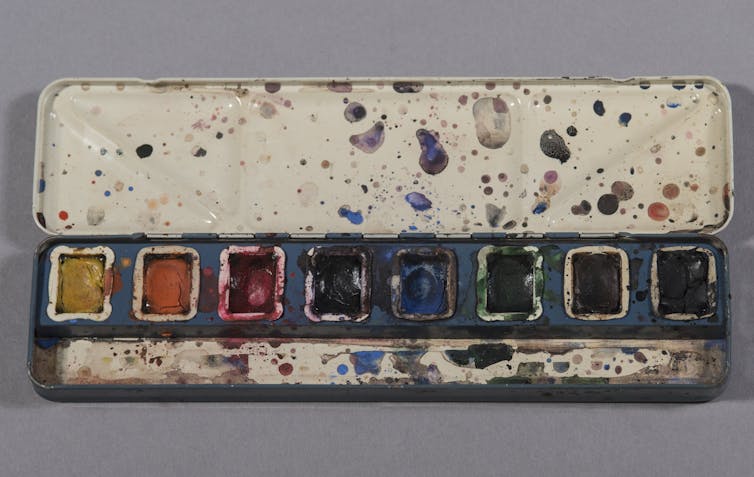
Watercolor sets like this one used by artist Alma Thomas can be found in art classrooms around the world.
Anacostia Community Museum, Smithsonian Institution, Gift of David Driskell, CC BY
Choosing the right materials
A lot of questions need to be answered before materials are chosen for a paint.
Who will use the paint? An artist, a house painter, an armadillo, a robot at an assembly plant?
Why is the paint being used? For museum paintings and sculptures? In designs for furniture or mailboxes?

How will the paint be applied? By brush, by spray, or some other way?
Where and when will the paint be used? Does it need to dry quickly or slowly? Will the painted surface get really cold or hot? Is the paint safe for kids to use at home or school?
What should the paint look like? Should the dried paint be shiny or matte? Should the surface be lumpy, or should it flatten and level out? Should the colors be bright or dull? Should the paint layers be opaque, transparent or almost clear? Does the paint need to hold up against scuffs and stains?
There are many different companies that design and make the wide range of paints used around the world for all these various applications. Experts at each manufacturer understand their special type of paint, how the paint materials are measured and mixed, and the