
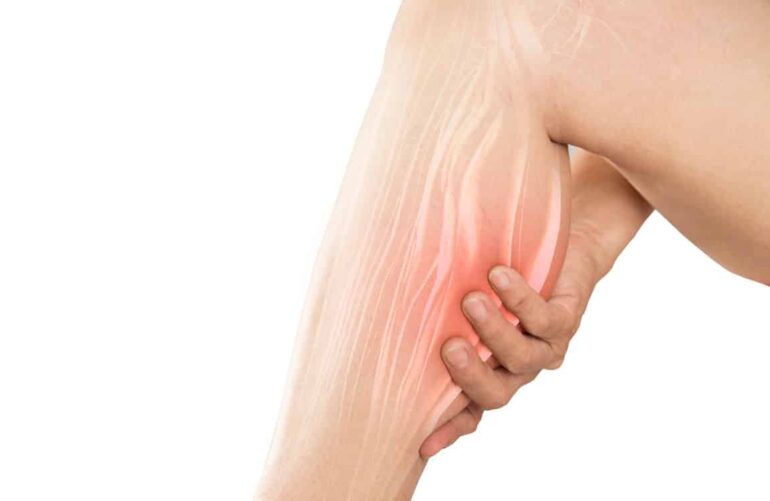
For athletes across all sports, few experiences are as agonizing as being forced to leave competition with a sudden muscle cramp. These painful, uncontrolled spasms – formally known as exercise-associated muscle cramps – have frustrated athletes, coaches and researchers for decades.
Scientists have traditionally attributed exercise-induced cramps to dehydration or electrolyte imbalances. However, this theory left unanswered questions. For example, many well-hydrated athletes experience cramps, while others competing in hot, humid conditions remain unaffected.
A growing body of research is challenging this explanation, pointing instead to the playing surface as a critical factor.
In my work as a sports scientist, I study how different variables affect athletic performance. Work from my team has found that specific qualities of playing surfaces can lead to early neuromuscular fatigue and unexpected muscle cramps.
Muscle cramps and playing surfaces
As muscles fatigue, the normal balance between signals in the nervous system that direct muscles to contract and relax become disrupted. Muscle spindles, which sense stretch, increase their firing rate. Meanwhile, inhibitory feedback from Golgi tendon organs – a part of the nervous system at the intersection of muscle fibers and tendons – declines.
In other words, muscles are getting mixed signals about whether to contract or relax. The result is excessive activation of motor neurons that stimulate muscle fibers into a sustained, involuntary contraction – a cramp.
Getting your muscles to contract and relax involves some intricate biochemistry.
Recent studies suggest that competing on surfaces with unfamiliar mechanical properties – such as stiffness and elasticity – can accelerate neuromuscular fatigue. Surfaces alter the mechanics of your muscles and joints. If your neuromuscular system is not accustomed to these demands, fatigue can prematurely set in and create the conditions for cramping.
In one study, my team and I found a 13% difference in muscle activity among runners performing on fields of varying stiffness and elasticity. Another study from my team found a 50% difference in hamstring activity among athletes performing identical drills on different types of turf.

Beyond sports-specific performance metrics, biomechanics research has long shown that altering the properties of playing surfaces changes muscle stiffness, joint loading and range of motion. These variables directly affect fatigue. Muscles crossing multiple joints such as the hamstrings appear especially vulnerable to variations in playing surfaces, given their central role in sprinting and cutting.
Preventing cramps during exercise
If playing surfaces influence fatigue, then managing how they interact with players could help prevent cramps.
Researchers have proposed developing regional databases cataloging the mechanical…