
Curious Kids is a series for children of all ages. If you have a question you’d like an expert to answer, send it to [email protected].
Where do seashells come from? – Ivy, age 5, Phoenix, Arizona
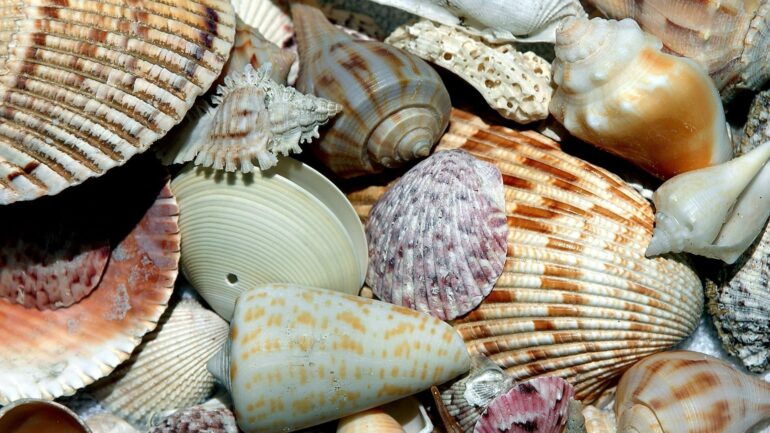
Seashells are so plentiful that you may sometimes take them for granted.
Scientists have estimated that just one small stretch of beaches along the Gulf of California contained at least 2 trillion shells. That is 2 followed by 12 zeros.
2,000,000,000,000 shells – in just one small stretch of coast! Imagine if every human alive today went there to collect shells. Each of them would be able to claim nearly 1,000 shells.
But where do all these shells come from, and what tales can they tell us?
We are a paleontologist and marine ecologist, and our scientific research involves looking at shells and discovering where they came from and how old they are.
Skeletons on the beach
Shells are simply skeletons of animals, the remains of dead organisms. But unlike humans and most other animals, these mollusks, such as snails, clams, oysters and mussels, have an exoskeleton, meaning it’s on the outside of their bodies.
When people talk about seashells, they usually mean shells of mollusks. And these are, indeed, the most common types of shells we find on the beach today. Many other marine animals also make skeletons, including, among others, echinoids such as sand dollars that make internal skeletons called tests, and brachiopods, also known as “lampshells.”
These marine animals build their own shells to protect their soft bodies from external threats, such as predators or changes that happen around them in their habitat. Shells can also help these sea creatures stay stable on the seafloor, grow bigger or move around more efficiently.

Just as our bones provide a scaffold to which we attach our muscles, shells provide a rigid frame to which sea creatures attach their muscles. Some mollusks, such as scallops, can even swim by using powerful muscles to vigorously flap the two valves that make their shell. Other sea creatures use muscles attached to their shells to quickly bury themselves in the sediment.
A clam on the beach buries itself in the sand then releases water and waste.
Variety is the spice of marine life
The process of making a shell is known as biomineralization. How marine animals build their shells can vary greatly depending on the species, but all of these animals have special tissues to make their shells, just as humans have special tissues to grow and strengthen our bones.
Most marine animals form their shells from calcium carbonate, which is a tough mineral also found in limestone. Some sponges and microorganisms use another compound silica. There is also a group of brachiopods that build shells using calcium phosphate, which we use to build our bones, too.
More than 50,000 mollusk…