
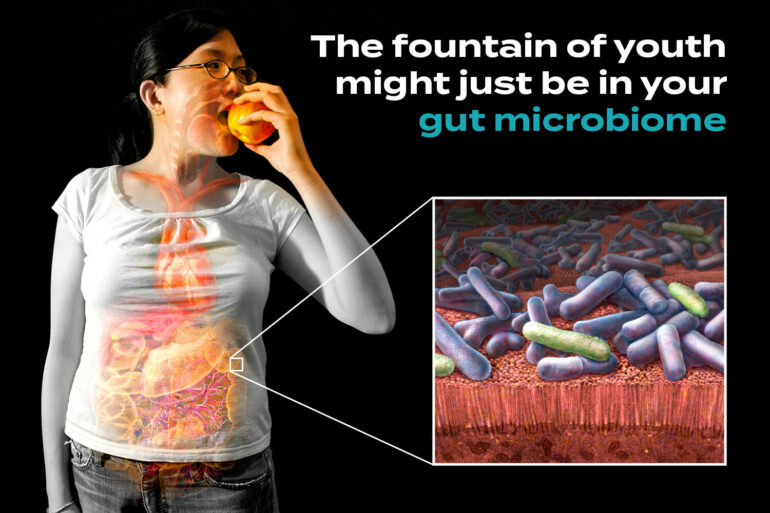
People have long given up on the search for the Fountain of Youth, a mythical spring that could reverse aging. But for some scientists, the hunt has not ended – it’s just moved to a different place. These modern-day Ponce de Leóns are investigating whether gut microbes hold the secret to aging well.
The gut microbiome refers to the vast collection of microscopic organisms – bacteria, fungi and viruses – that largely inhabit the colon. These microbes aid in digestion and produce molecules that affect your physiology and psychology. The composition of the microbiome is influenced by a combination of factors, including genetics, diet, the environment, medications and age.
I’m a microbiology professor and author of “Pleased to Meet Me: Genes, Germs and the Curious Forces That Make Us Who We Are,” which describes how the gut microbiome contributes to physical and mental health. The discovery that the gut microbiome changes with age has ignited studies to determine whether the Fountain of Youth might be right under your nose, down inside your gut.
You’re only as old as your gut microbes
People are most familiar with outward signs of aging, such as wrinkles and graying hair, but there are also microscopic changes taking place deep inside. The gut microbes of older people tend to be less diverse, with more bacteria that promote inflammation and other hallmarks of aging. Changes to the microbiome across age are so consistent that algorithms can reliably predict a person’s age based on their microbiome composition.
There are exceptions to this rule. Older adults and supercentenarians who age well have a gut microbiome that looks more like those of younger people. These findings support the idea that maintaining a youthful microbiome fosters healthy aging and longevity.
Researchers are studying the body’s hidden markers of biological age.
To confirm that the microbes of youth influence aging, scientists use a technique called fecal microbiota transplantation. This procedure involves obliterating a person’s current gut microbiome and replacing it with microbes harvested from a donor’s feces. Transplanting microbiota from a young mouse into an elderly mouse reverses age-associated inflammation in the gut, brain and eyes. Conversely, transplanting microbiota from an old mouse into a young one accelerates these aging parameters. Other studies suggest that microbiota from young mice alter metabolism in ways that reduce inflammation that accelerates aging.
The evidence that aging is linked with the microbiome is compelling. However, fecal transplantation is not without risk and is approved only as a last resort to treat severe C. difficile infections. These shortcomings have prompted researchers to search for safer and more refined ways to cultivate an age-friendly microbiome.
Diet and exercise may slow aging
Proper diet and exercise have long been…