

From solar panels on our roofs to the new OLED TV screens, many everyday electronic devices simply wouldn’t work without...
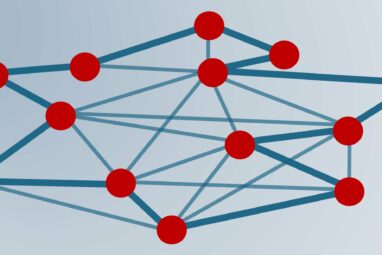
The traveling salesman problem is considered a prime example of a combinatorial optimization problem. Now a Berlin team led by...

The origin of heavy elements in our universe is theorized to be the result of neutron star collisions, which produce...

Altermagnets represent a newly recognized class of materials in magnetism that could enable novel applications in spin-based electronics. Their magnetically...

Computers work in digits—0s and 1s, to be exact. Their calculations are digital; their processes are digital; even their memories...

There are many things we don’t know about how history unfolds. The process might be impersonal, even inevitable, as some...

Physicists at the University of Regensburg have choreographed the shift of a quantized electronic energy level with atomic oscillations faster...

The IceCube Neutrino Observatory, a cubic-kilometer-sized neutrino telescope at the South Pole, has observed a new kind of astrophysical messenger....

A breakthrough could help lead to the development of new low-power semiconductors or quantum devices. As the integrated circuits that...

Physicists often turn to the Rayleigh-Taylor instability to explain why fluid structures form in plasmas, but that may not be...

Tiny particles like pollen grains move constantly, pushed and pulled by environmental forces. To study this motion, physicists use a...

Sand ripples are fascinating. They are symmetrical, yet wind, which causes them, is very much not. Furthermore, they can be...