

Humans have been entranced by the unique beauty and physical properties of glass, producing jewelry, containers, and tools from the...

Hydrogen is the most common element in the universe. It determines the properties of stars and planets and is crucial...

Defects often limit the performance of devices such as light-emitting diodes (LEDs). The mechanisms by which defects annihilate charge carriers...

US scientists responsible for a historic nuclear fusion breakthrough say they have repeated the feat—this time achieving a greater yield...
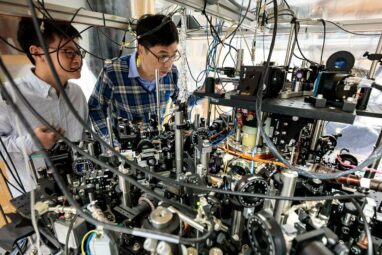
A team from the University of Chicago has announced the first evidence for “quantum superchemistry”—a phenomenon where particles in the...

Topology plays an enormous role in modern condensed matter physics and beyond. It describes how solid materials can combine two...

Bringing protons up to speed with strong laser pulses—this still young concept promises many advantages over conventional accelerators. For instance,...
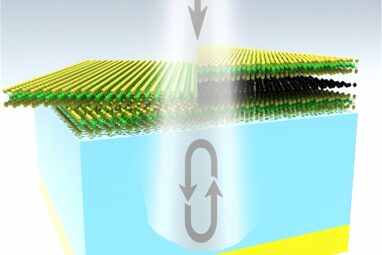
A University of Minnesota-led team has, for the first time, engineered an atomically thin material that can absorb nearly 100%...
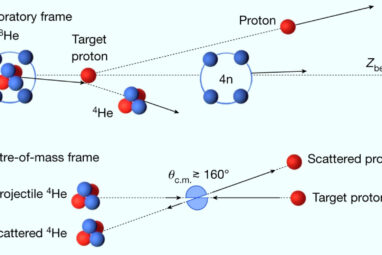
Atomic nuclei consist of nucleons such as protons and neutrons, which are bound together by nuclear force or strong interaction....
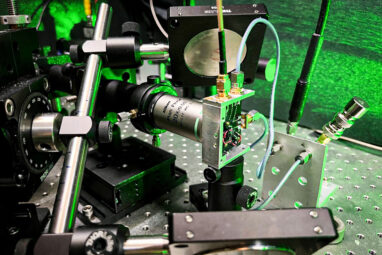
Electronic devices typically use the charge of electrons, but spin—their other degree of freedom—is starting to be exploited. Spin defects...

At particle accelerator facilities around the world, scientists rely on powerful X-rays to reveal the structure and behavior of atoms...

“A place for everything and everything in its place”—making sense of order, or disorder, helps us understand nature. Animals tend...