
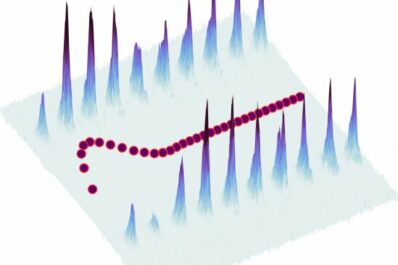
Physicists at UC Santa Barbara have become the first to experimentally observe a quirky behavior of the quantum world: a...
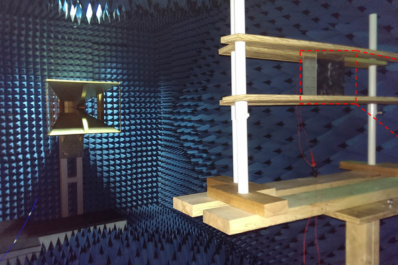
Researchers have developed a new metasurface-based antenna that represents an important step toward making it practical to harvest energy from...
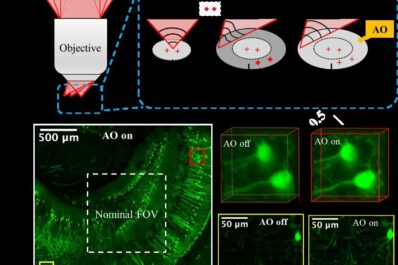
Two-photon microscopy (TPM) enables the observation of cellular and subcellular dynamics and functions in deep nervous tissues, providing critical in...
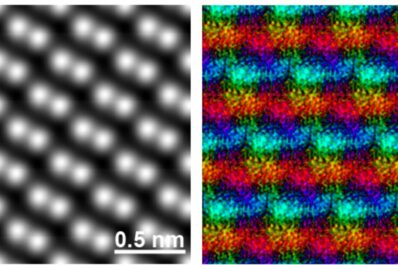
The joint development team of Professor Shibata (the University of Tokyo), JEOL Ltd. and Monash University succeeded in directly observing...
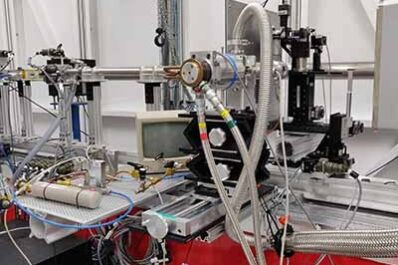
Extreme conditions—severe pressure, intense temperatures, and high levels of radiation— exist all over the earth and beyond. Scientists are using...
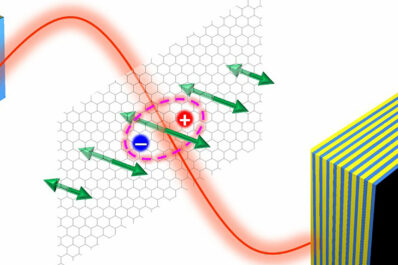
Atomically thin two-dimensional (2D) materials can provide highly interesting excitonic properties, which render them an attractive platform to explore polaritonic...
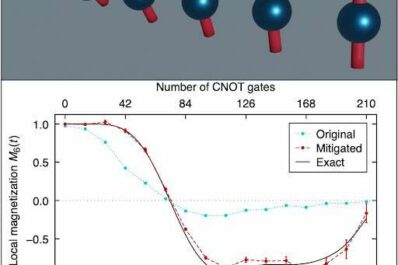
A collaboration between Lawrence Berkeley National Laboratory’s (Berkeley Lab’s) Applied Mathematics and Computational Research Division (AMCRD) and Physics Division has...
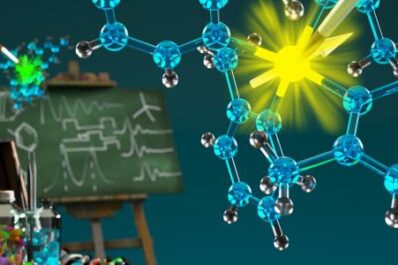
A ground-up approach to qubit design leads to a new framework for creating versatile, highly tailored quantum devices. Advances in...

When it comes to describing the fundamental structure and composition of matter, the research field of quantum chromodynamics (QCD) comes...

Scientists from the Fritz Haber Institute of the Max Planck Society, Vanderbilt University, City University of New York, University of...
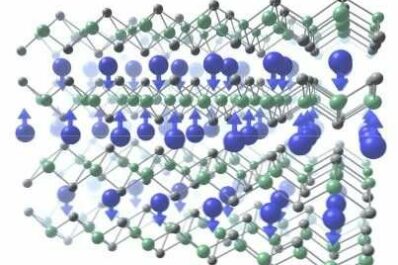
In an international collaboration led by scientists from the Fritz Haber Institute in Berlin, a novel approach to controlling the...

Networks are systems comprising many components that interact with one another through a collection of connections, nodes and links. In...