One of the great mysteries of modern science is dark matter. We know dark matter exists thanks to its effects...
Ching-Yao Tang and Dr. Ke-Jung Chen from the Institute of Astronomy and Astrophysics, Academia Sinica (ASIAA) have made substantial progress...
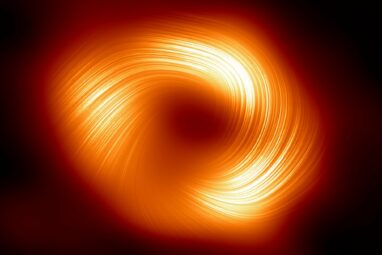
A new image from the Event Horizon Telescope (EHT) collaboration—which includes scientists from the Center for Astrophysics | Harvard &...
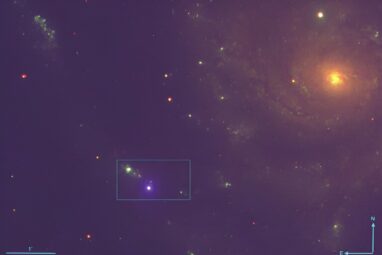
Accounts of supernovae—exploding stars—go back thousands of years, and while we know today these events create the building blocks of...
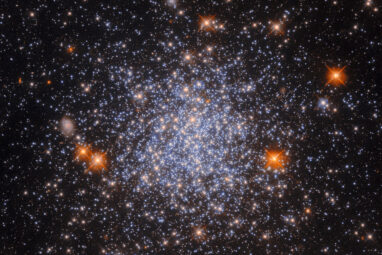
In the year 1181 a rare supernova explosion appeared in the night sky, staying visible for 185 consecutive days. Historical...
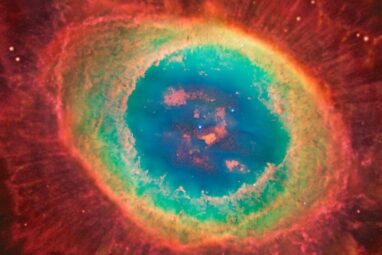
A study from the Instituto de Astrofísica de Canarias (IAC) which combines laboratory chemistry with astrophysics, has shown for the...
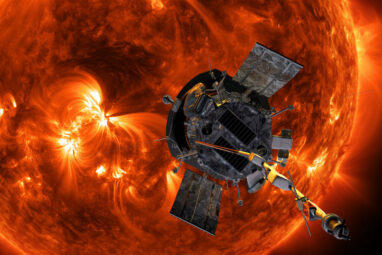
The Wide-field Imager for Parker Solar Probe (WISPR) Science Team, led by the U.S. Naval Research Laboratory (NRL), captured the...

For the first time, astronomers have measured the speed of fast-moving jets in space, crucial to star formation and the...
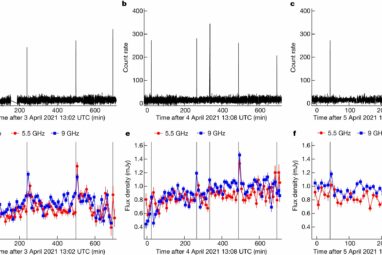
How fast can a neutron star drive powerful jets into space? The answer, it turns out, is about one-third the...
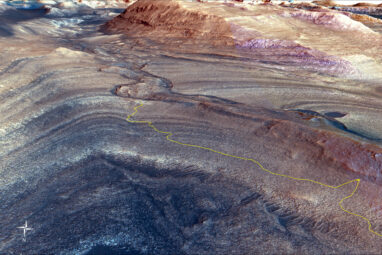
NASA’s Curiosity rover has begun exploring a new region of Mars, one that could reveal more about when liquid water...
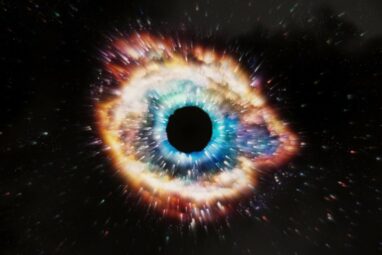
A researcher at Colorado State University has developed a potential approach for identifying and understanding dark matter using the soon-to-be-built...
Stars like the Sun are remarkably constant. They vary in brightness by only 0.1% over years and decades, thanks to...