

As a graduate student in physics, I was often the only woman in the room. As I gained more experience, I learned valuable lessons about the scientific community and how to better advance my career. Once I started mentoring female graduate students, I realized that many of them had also felt alienated around some scientists, an experience that chipped away at their confidence or the passion for their work.
Over two decades of doing research and mentoring students, I have compiled some tools that give women the power to improve their own experiences in the STEM world. In 2019, I turned these resources into an experiential course called Tools for Women in STEM. Although the course is designed for women, all genders are welcome.
There are many reasons women are underrepresented in STEM, including bias and stereotypes, but also workplace cultures and the absence of policies for work-life balance. A report from the American Association for University Women makes recommendations for improving the retention of women in STEM careers: ensuring women are getting the mentoring they need, supporting a work-life balance and creating a welcoming culture.
This is all easier said than done. Despite the many programs and initiatives implemented across the country since 2010, when the AAUW report came out, the percentage of women in many fields of science, technology, engineering and math continues to stay very low, with a trend that is flat at best. Even if they come into the field, many choose to leave.
What does the course explore?
To help young women navigate their professional lives in STEM, I start by taking each student on a personal journey, beginning by contextualizing their experiences in STEM. Students reflect on the shame triggers that can make them feel like they’re not good enough even when their record is stellar, as well as any biases they may have about others. Self-awareness is an essential starting point.
Students then work on skills with real-life impact, ranging from networking at meetings and building effective relationships with mentors to negotiations, dealing with harassment and exploring leadership roles. This is done through in-class activities and often followed up with practice in their real life.
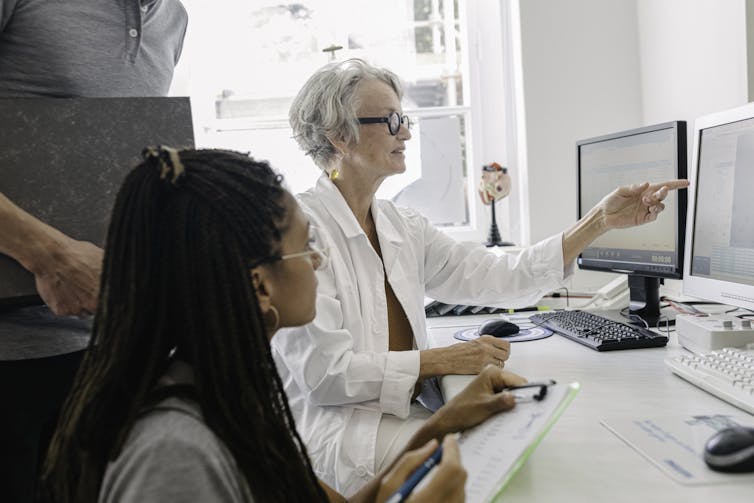

Strong relationships with mentors can help women succeed in the STEM field.
Willie B. Thomas/DigitalVision via Getty Images
What does the course prepare students to do?
Prepped by videos and papers, students practice these skills and discuss strategies in small groups. This model provides an opportunity for collaboration and for assimilating and sharpening all the skills covered in the course.
Take mentoring as an example. Students practice reaching out to potential mentors and establishing a new mentoring relationship. Through discussion, students learn to both receive and provide useful feedback. When students have a safe, trusting environment, they’re more inclined to try out…