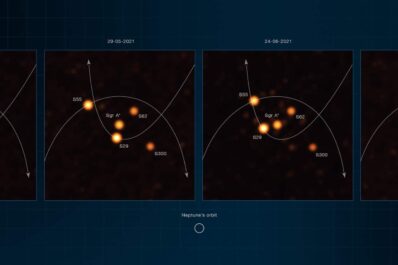
The European Southern Observatory’s Very Large Telescope Interferometer (ESO’s VLTI) has obtained the deepest and sharpest images to date of...
Astronomers have a new way of detecting active black holes in the Universe and measuring how much matter they are...
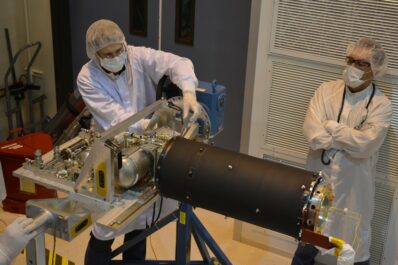
Set to launch on Dec. 22, NASA’s James Webb Space Telescope is the largest space observatory in history, and it...
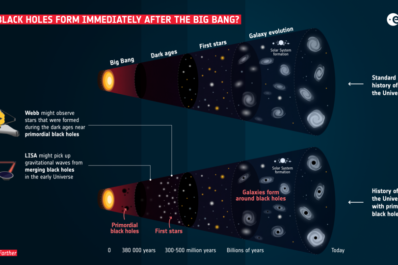
How did supermassive black holes form? What is dark matter? In an alternative model for how the universe came to...
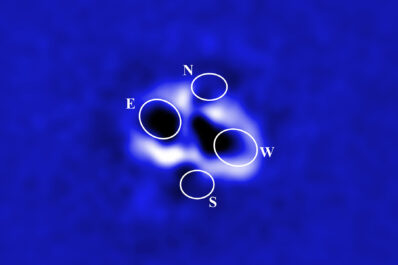
Scientists have found four enormous cavities, or bubbles, at the center of a galaxy cluster using NASA’s Chandra X-ray Observatory....
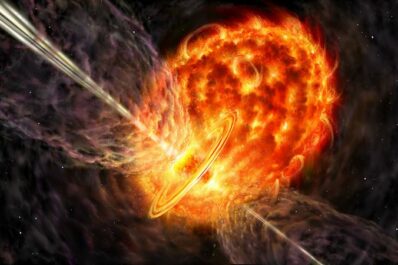
Unlike our Sun, most stars live with a companion. Sometimes, two come so close that one engulfs the other—with far-reaching...
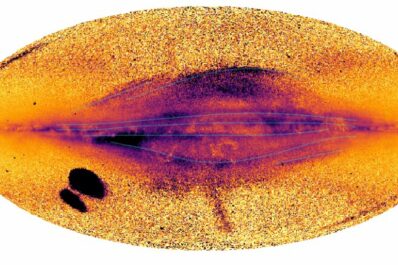
An international team of astronomers, led by researcher Chervin Laporte of the Institute of Cosmos Sciences of the University of...
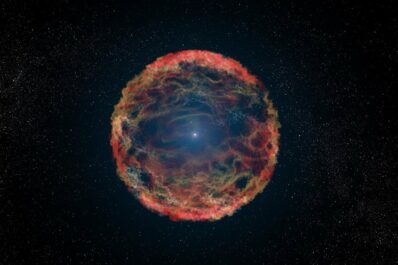
In June of 2018, telescopes around the world picked up a brilliant blue flash from the spiral arm of a...
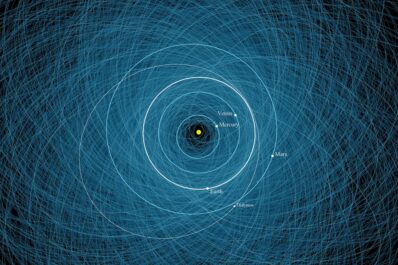
To date, nearly 28,000 near-Earth asteroids (NEAs) have been found by survey telescopes that continually scan the night sky, adding...
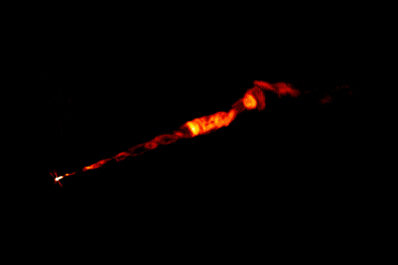
Astronomers using the National Science Foundation’s Karl G. Jansky Very Large Array (VLA) have shown that a jet of material...
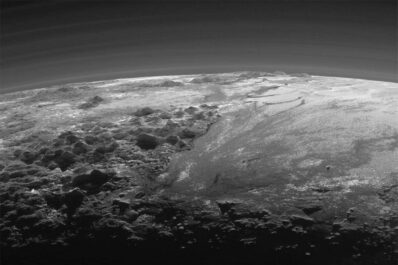
As the new space race continues, a team of top researchers says one thing needs to be cleared up—what exactly...
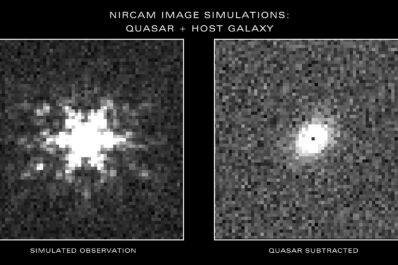
Very distant, active supermassive black holes are the brightest beacons in the universe. Known as quasars, these behemoths are surrounded...