The first pulsar was discovered in 1967. With an increase in pulsar observations, astronomers have found that some pulsars have...
Over the last 25 years, astronomers have found thousands of exoplanets around stars in our galaxy, but more than 99%...
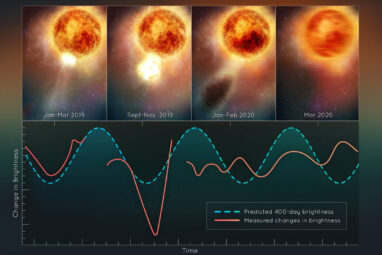
Analyzing data from NASA’s Hubble Space Telescope and several other observatories, astronomers have concluded that the bright red supergiant star...
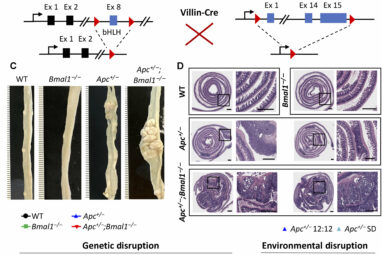
Astronomers have long sought the launch sites for some of the highest-energy protons in our galaxy. Now a study using...
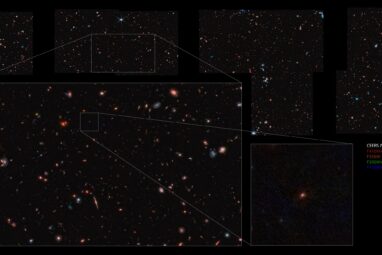
Two new images from NASA’s James Webb Space Telescope show what may be among the earliest galaxies ever observed. Both...
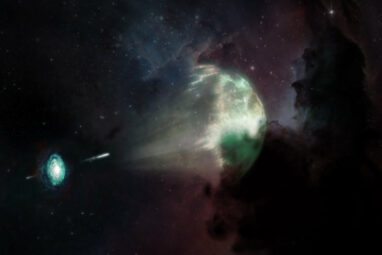
Scientists using the Atacama Large Millimeter/submillimeter Array (ALMA)—an international observatory co-operated by the U.S. National Science Foundation’s National Radio Astronomy...

As satellites crawl across the sky, they reflect light from the sun back down to Earth, especially during the first...
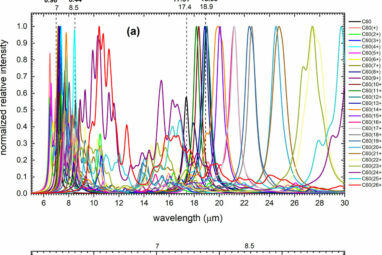
Is there now at long last some plausible theoretical basis for the molecular origins and carriers of at least some...
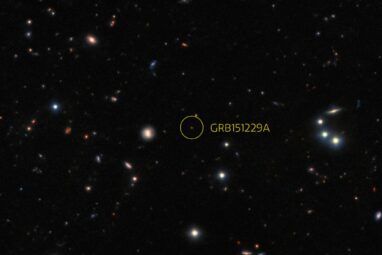
An international team of astronomers has found that certain short gamma-ray bursts (GRBs) did not originate as castaways in the...
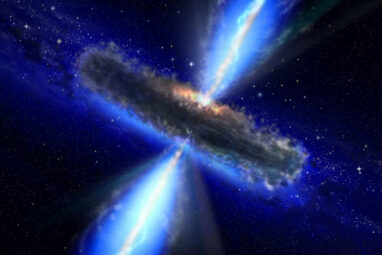
Black holes with varying light signatures but that were thought to be the same objects being viewed from different angles...
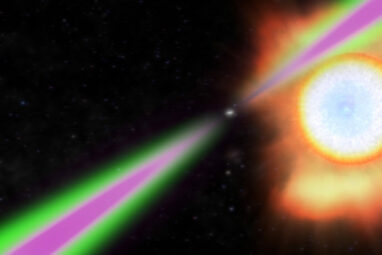
A dense, collapsed star spinning 707 times per second—making it one of the fastest spinning neutron stars in the Milky...
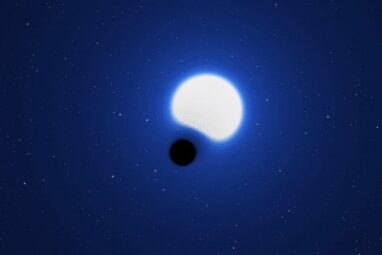
There is always something new and exciting happening in the field of black hole research. Albert Einstein first published his...