
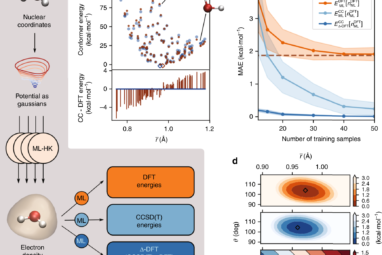
Living organisms, ecosystems and the planet Earth are, from a physics point of view, examples of extraordinarily large and complex...
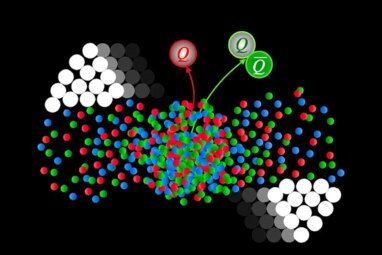
The building blocks of atomic nuclei are protons and neutrons, which are themselves made of even more fundamental particles: quarks...
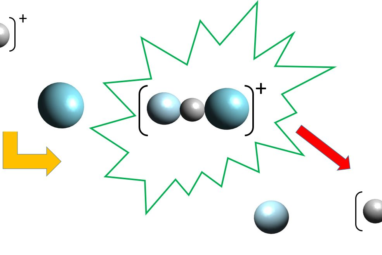
A Freie Universität Berlin research team headed by quantum physicist Professor Christiane Koch has demonstrated how hydrogen molecules behave when...

The digital age has been a tremendous boon to the fields of both statistics and astronomy. However, according to Dr....
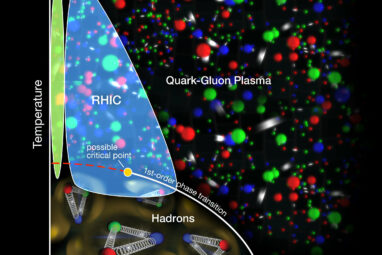
Physicists analyzing data from gold ion smashups at the Relativistic Heavy Ion Collider (RHIC), a U.S. Department of Energy (DOE)...
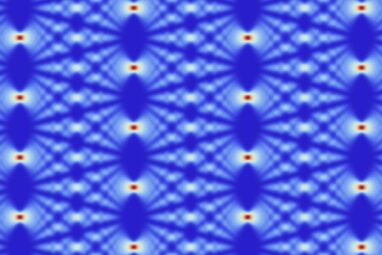
Darmstadt physicists have developed a technique that could overcome one of the biggest hurdles in building a practically-relevant quantum computer....
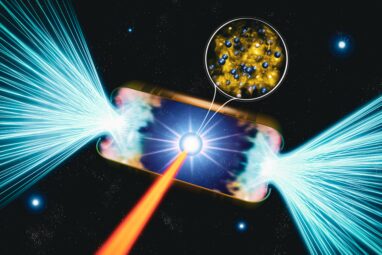
Scientists have conducted laboratory experiments at Lawrence Livermore National Laboratory (LLNL) that provide new insights on the complex process of...
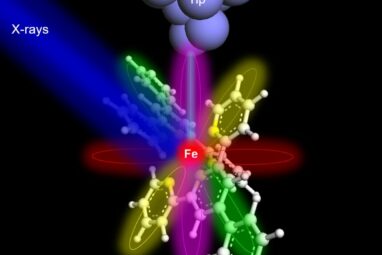
A team of scientists from Ohio University, Argonne National Laboratory, the University of Illinois-Chicago, and others, led by Ohio University...
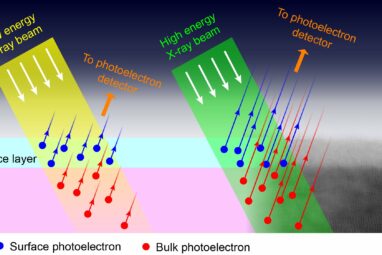
Whether it’s baking a cake, building a house, or developing a quantum device, the quality of the end product significantly...
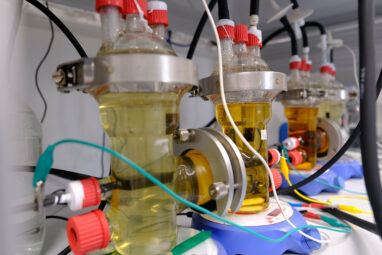
Electron microscopes give us insight into the tiniest details of materials and can visualize, for example, the structure of solids,...
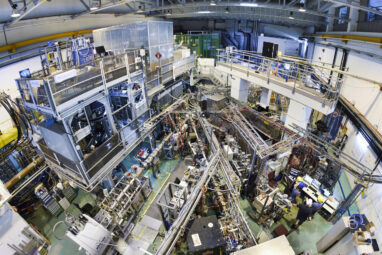
Atomic clocks are the world’s most precise timekeepers. Based on periodic transitions between two electronic states of an atom, they...
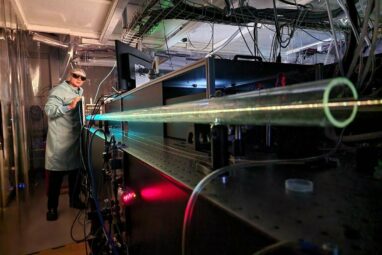
A laser pulse hits an electron in a solid. If it receives enough energy from the light wave, it can...