The Earth exists in a dangerous environment. Cosmic bodies, like asteroids and comets, are constantly zooming through space and often...

For almost 10 years, NASA’s NuSTAR (Nuclear Spectroscopic Telescope Array) X-ray space observatory has been studying some of the highest-energy...
For the first time, Northwestern University-led astronomers may have detected an afterglow from a kilonova. A kilonova occurs when two...
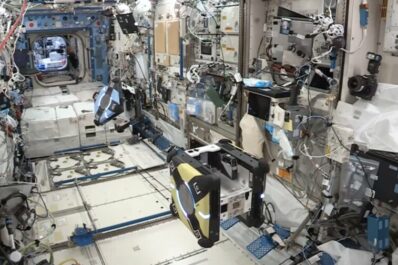
In 2002, the European Space Agency launched Envisat, the largest civilian satellite (at the time) to go to low Earth...
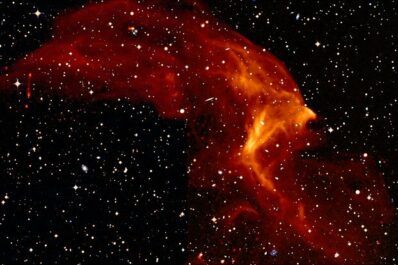
An international team of astronomers led by the Hamburg Observatory made the most detailed images of the largest cosmic shock...
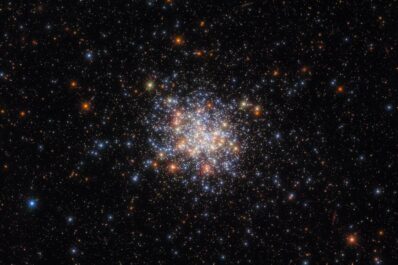
Some humans try to look younger than they really are—stars do, too. This is reported by an international team of...
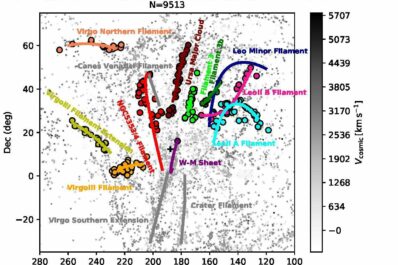
The shape of galaxies and how they evolve depend on a web of cosmological filaments that run across the universe....
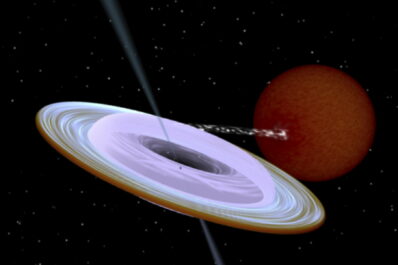
Researchers from the University of Turku, Finland, found that the axis of rotation of a black hole in a binary...
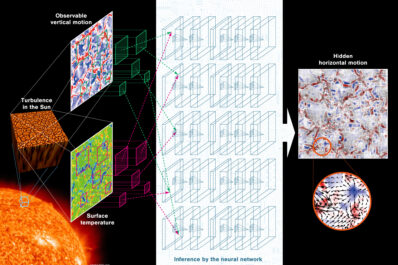
Scientists developed a neural network deep learning technique to extract hidden turbulent motion information from observations of the sun. Tests...
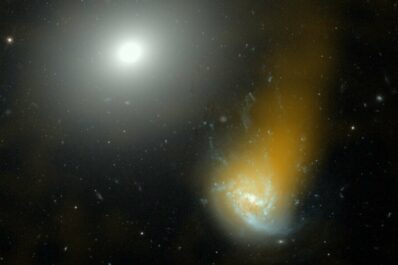
Durham University astronomer collaborating with a team of international scientists have mapped more than a quarter of the northern sky...
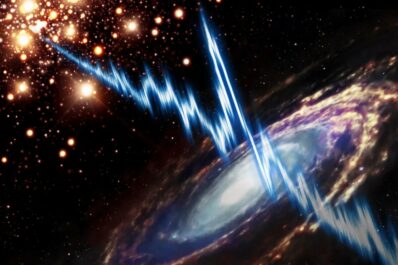
Astronomers have been surprised by the closest source of mysterious flashes in the sky called fast radio bursts. Precision measurements...
NASA’s Nancy Grace Roman Space Telescope, now under construction, will test new technologies for space-based planet hunting. The mission aims...