
Very few proteins in the body have adaptations that make them unique compared to the corresponding proteins in Neanderthals and...
University of Maryland biologists developed the first mathematical simulations of bacterial communities that incorporate the complex interactions and rapid evolution...
Researchers at EMBL’s European Bioinformatics Institute (EMBL-EBI), the National Institutes of Health (NIH) National Human Genome Research Institute (NHGRI), the...
During long portions of the past 2.4 billion years, the Earth may have been more inhospitable to life than scientists previously...

One of the most comprehensive studies conducted on beavers has conclusively demonstrated that beavers are essential for freshwater conservation and...
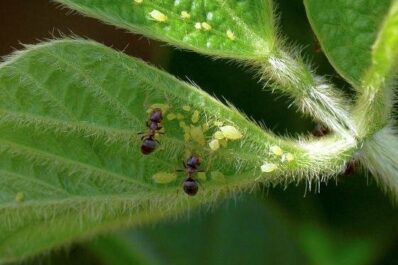
Neonicotinoids and other systemic insecticides can contaminate honeydew, which is an important food source for beneficial insects in agroecosystems, according...
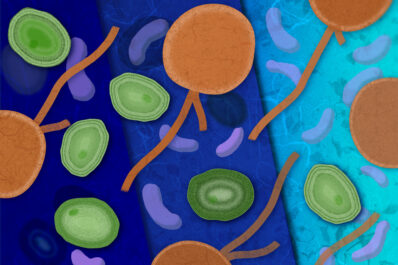
Prochlorococcus are the smallest and most abundant photosynthesizing organisms on the planet. A single Prochlorococcus cell is dwarfed by a...
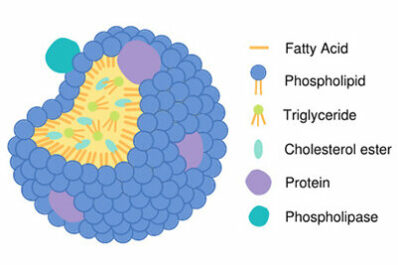
Membrane-associated proteins play a vital role in a variety of cellular processes, yet little is known about the membrane-association mechanism....
Nuclear pore complexes (NPCs) are massive multi-protein complexes that act as passageways for the transport of molecules into and out...
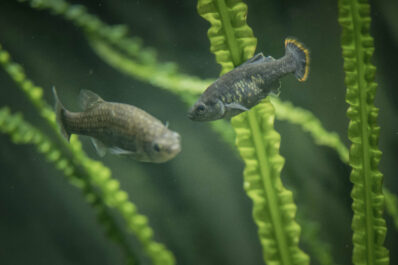
There once was a small fish called “tequila splitfin” or “zoogoneticus tequila” that swam in a river in western Mexico,...
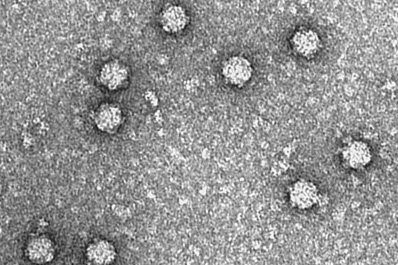
Natural evolution is a slow process that relies on the gradual accumulation of genetic mutations. In recent years, scientists have...

A new study shows how cell membranes curve to create the “mouths” that allow the cells to consume things that...