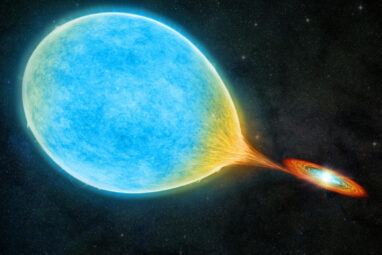
Nearly half the stars in our galaxy are solitary like the sun. The other half comprises stars that circle other...
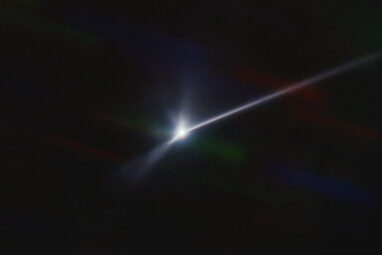
The asteroid that got smacked by a NASA spacecraft is now being trailed by thousands of miles of debris from...
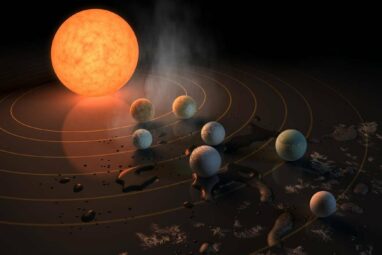
Scientists at UC Riverside are suggesting something is missing from the typical roster of chemicals that astrobiologists use to search...
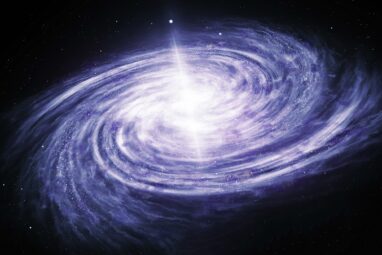
The alignment between galaxy spins and the large-scale structure of the universe reveals the processes by which different components of...
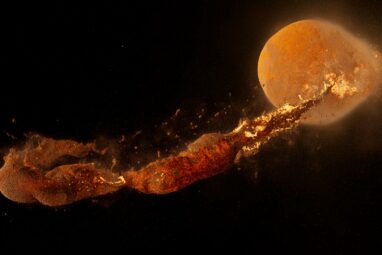
Scientists from Durham University’s Institute for Computational Cosmology used the most detailed supercomputer simulations yet to reveal an alternative explanation...
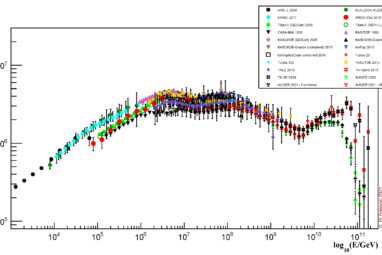
Cosmic rays constitute high-energy protons and atomic nuclei that originate from stars (both within our galaxy and from other galaxies)...
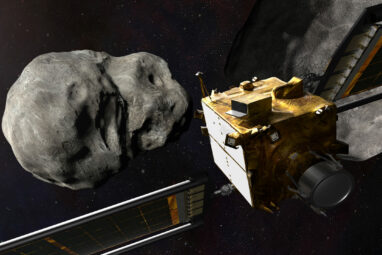
NASA will on Monday attempt a feat humanity has never before accomplished: deliberately smacking a spacecraft into an asteroid to...
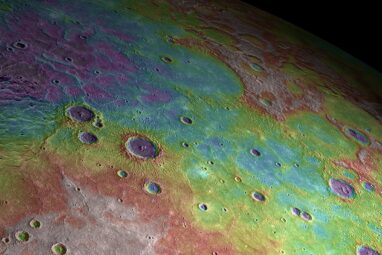
Compared with Earth, the surfaces of most other objects in the solar system appear largely static. Planetary scientists have long...
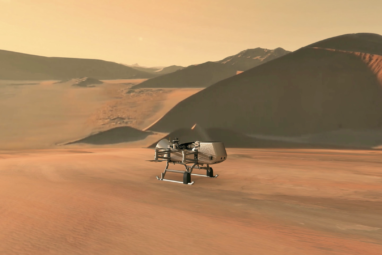
When NASA’s 990-pound Dragonfly rotorcraft reaches the Selk crater region—the mission’s target touchdown spot—on Saturn’s moon Titan in 2034, Cornell’s...
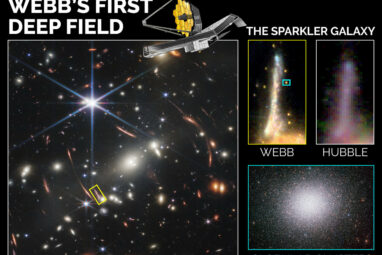
Using the James Webb Space Telescope (JWST), researchers from the CAnadian NIRISS Unbiased Cluster Survey (CANUCS) team have identified the...
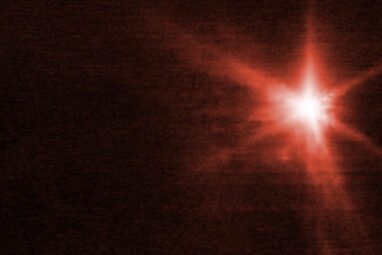
The James Webb and Hubble telescopes on Thursday revealed their first images of a spacecraft deliberately smashing into an asteroid,...
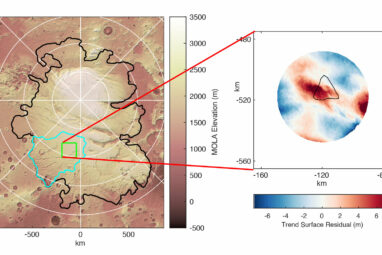
An international team of researchers has revealed new evidence for the possible existence of liquid water beneath the south polar...