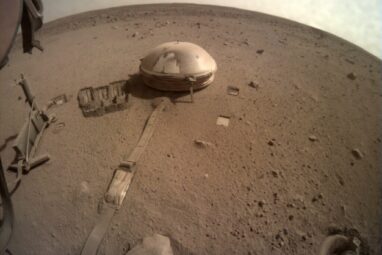
A new analysis of seismic data from NASA’s Mars InSight mission has revealed a couple of surprises. The first surprise:...
Scientists at the Event Horizon Telescope (EHT) have imaged the distant blazar J1924-2914 with unprecedented angular resolution, revealing previously unseen...
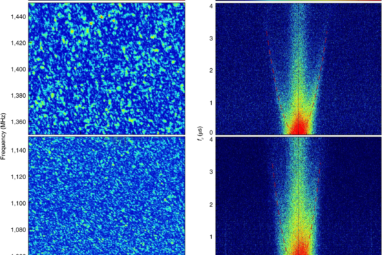
The first pulsar was discovered in 1967. With an increase in pulsar observations, astronomers have found that some pulsars have...

A potentially better way to make oxygen for astronauts in space using magnetism has been proposed by an international team...
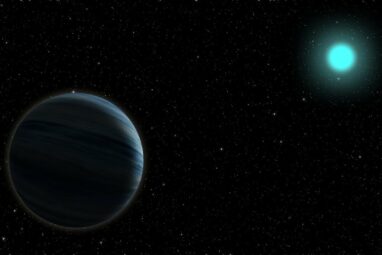
Over the last 25 years, astronomers have found thousands of exoplanets around stars in our galaxy, but more than 99%...
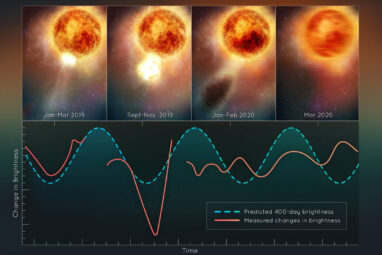
Analyzing data from NASA’s Hubble Space Telescope and several other observatories, astronomers have concluded that the bright red supergiant star...
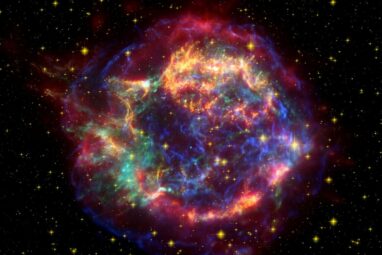
A Northwestern University astrophysics team is aiming for the stars—well, a dead star, that is. On Aug. 21, the NASA-funded...
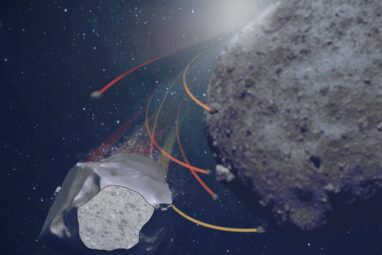
In 2019, NASA’s OSIRIS-REx spacecraft sent back images of a geological phenomenon no one had ever seen before: pebbles were...
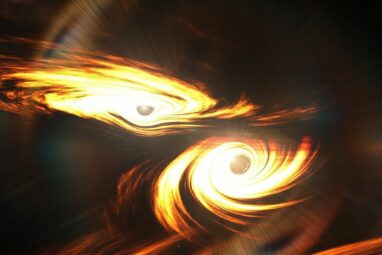
Just milliseconds after the universe’s Big Bang, chaos reigned. Atomic nuclei fused and broke apart in hot, frenzied motion. Incredibly...
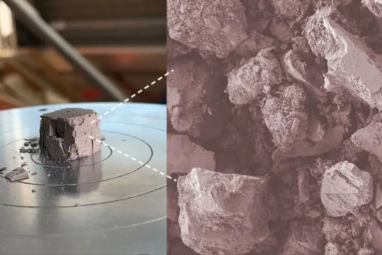
Sustained space exploration will require infrastructure that doesn’t currently exist: buildings, housing, rocket landing pads. So, where do you turn...

Astronomers have long sought the launch sites for some of the highest-energy protons in our galaxy. Now a study using...
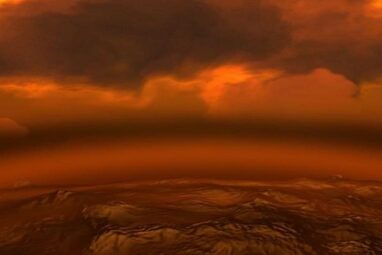
Scientists using sophisticated computational chemistry techniques have identified a new pathway for how sulfur particles can form in the atmosphere...