
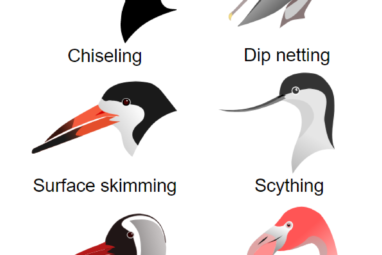
If you see a great bustard (Otis tarda) in the wild, you’re unlikely to forget it. Massive, colorful, and impossible...
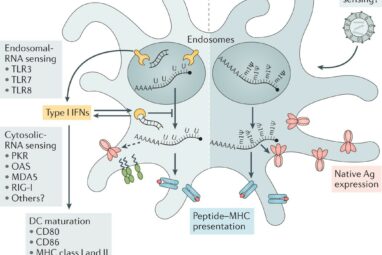
A team of synthetic biologists at the Hong Kong University of Science and Technology (HKUST) has recently discovered a way...
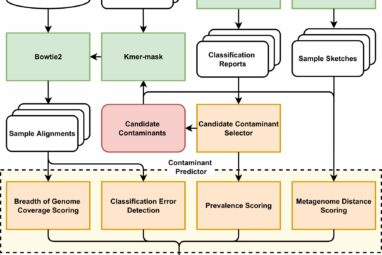
One of the major challenges in microbiome science has been distinguishing what is a potential environmental contaminant from a true,...
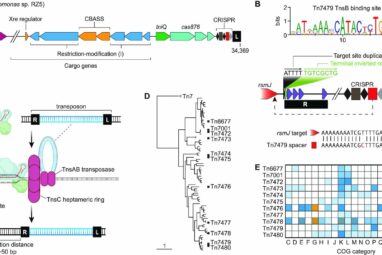
In a new study, North Carolina State University researchers characterize a range of molecular tools to rewrite—not just edit—large chunks...
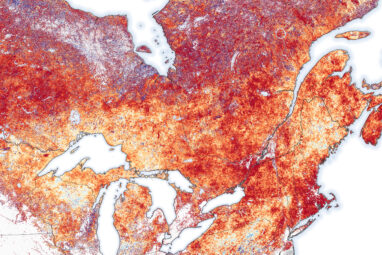
Tick bites transmit Lyme disease. But even knowing where these ticks live doesn’t necessarily mean you can predict the disease...
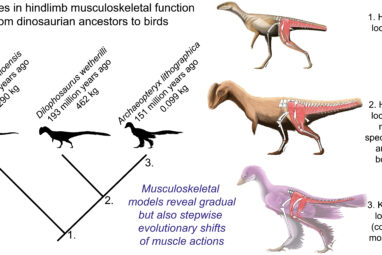
Dinosaurs—and birds—wouldn’t have been able to stand on their own two feet without some radical changes to their upper thigh...
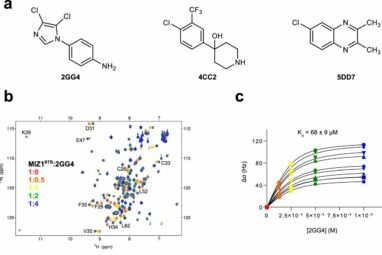
Some of the toughest challenges in treating disease are presented by “undruggable” proteins whose structures and roles in disease are...

Researchers have discovered how plant roots adapt their shape to maximize their uptake of water, pausing branching when they lose...
Many estimates of how strongly traits and diseases share genetic signals may be inflated, according to a new UCLA-led study...

Lawrence Livermore National Laboratory (LLNL) and UC Santa Cruz scientists have detected a previously hypothesized class of nitrogen fixation in...

Capuchin monkeys (Sapajus spp.) are among only a few primates that use tools in day-to-day activities. In the Cerrado and...

When humans get hurt, they feel pain. Between these occurrences there is a series of indirect relay reactions. An analogical...